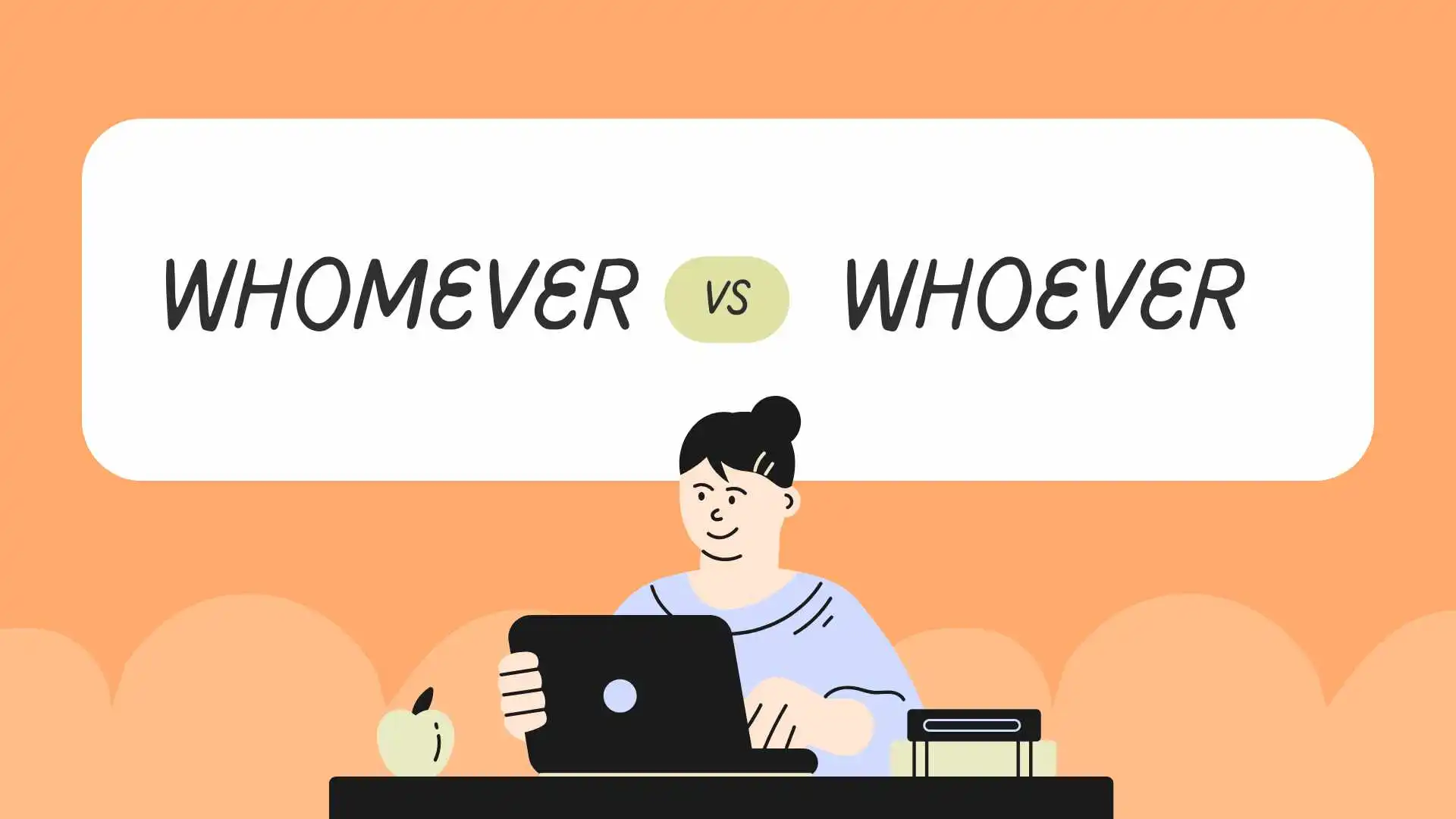
Many English learners and even native speakers often feel confused about whomever or whoever. These two words look very similar and have almost the same meaning, but their grammar usage is different. Because of this, people frequently search online to understand which one is correct in a sentence.
The confusion usually happens because English grammar rules about subjects and objects can be tricky. When writing formal English such as emails, essays, or professional documents using the wrong word can make a sentence sound incorrect or awkward.
Understanding the difference between whomever or whoever helps improve your grammar and communication skills. In this article, you will learn the meaning of each word, their differences, examples, grammar rules, common mistakes, and simple tricks to remember the correct usage.
Quick Answer
The difference between whomever or whoever depends on grammar function.
- Whoever is used as a subject in a sentence or clause.
- Whomever is used as an object of a verb or preposition.
A simple trick is this: if you can replace the word with single one, then use whoever. If him/her fits, use whomever.
Meaning and Definition of Each Word
Meaning of “Whoever”
Whoever refers to any person who or the person who, and it is used as a subject in a sentence.
It often introduces a clause and refers to an unknown or unspecified person.
Simple definition:
Whoever means any person who performs an action.
Examples:
- Whoever finishes first will win the prize.
- Give the ticket to whoever arrives first.
- Whoever wants to join the meeting is welcome.
In each example, whoever is the subject performing the action.
Meaning of “Whomever”
Whomever refers to any person whom and is used as the object of a verb or preposition.
Simple definition:
Whomever means any person who receives the action.
Examples:
- You may invite whomever you like.
- The prize will be given to whomever the judges choose.
- Send the message to whomever you trust.
In these sentences, whomever receives the action.
Key Differences Between Whomever or Whoever
Here are the main differences between whomever or whoever:
- Whoever acts as the subject of a verb.
- Whomever acts as the object of a verb or preposition.
- Whoever replaces he, she, or they.
- Whomever replaces him, her, or them.
- Whoever is more commonly used in everyday English.
- Whomever appears more often in formal writing.
Comparison Table
| Word | Meaning | Usage | Example |
| Whoever | Any person who performs the action | Used as a subject | Whoever calls first gets the ticket |
| Whomever | Any person who receives the action | Used as an object | Invite whomever you want |
Examples in Sentences
Below are real-life examples that show how to use whomever or whoever correctly.
Examples Using “Whoever”
- Whoever works hard will succeed.
- Whoever wants coffee can take a cup.
- Whoever wrote this book did a great job.
- Whoever is responsible should fix the problem.
- Whoever arrives first can choose the seat.
- Whoever calls me tonight will get the answer.
In all these sentences, whoever is performing the action.
Examples Using “Whomever”
- Give the package to whomever answers the door.
- Choose whomever you prefer for the job.
- The manager will hire whomever the team recommends.
- Send the email to whomever you trust most.
- She will help whomever you bring to the meeting.
- Offer the seat to whomever needs it.
Here, whomever receives the action.
Common Mistakes
Many people mix up whomever or whoever because the sentences can look complicated.
Mistake 1: Using “Whomever” as a Subject
❌ Incorrect:
Whomever finishes first wins the race.
✅ Correct:
Whoever finishes first wins the race.
Reason: Whoever is the subject performing the action.
Mistake 2: Using “Whoever” as an Object
❌ Incorrect:
Give the book to whoever you like.
✅ Correct (formal grammar):
Give the book to whomever you like.
However, in modern casual English, many people still say whoever, and it is widely accepted.
Mistake 3: Overusing “Whomever”
Some writers use whomever because they think it sounds more formal.
❌ Incorrect:
Whomever wants pizza can take a slice.
✅ Correct:
Whoever wants pizza can take a slice.
Tips to Remember the Difference
Here are some simple tricks to remember whomever or whoever.
1. He vs Him Trick
Replace the word with he or him.
- If he works → use whoever
- If him works → use whomever
Example:
Give the award to whoever/whomever wins.
Test sentence:
- He wins → correct
So use whoever.
Correct sentence:
Give the award to whoever wins.
2. Subject vs Object Rule
Ask yourself:
- Who is doing the action? → Whoever
- Who receives the action? → Whomever
3. Formal vs Casual English
In modern English, many people simply use whoever in everyday speech.
Whomever mainly appears in formal writing.
When to Use Each Word
Use “Whoever” When
- The word is the subject of a verb
- It replaces he, she, or they
- The person is doing the action
Examples:
- Whoever studies will pass the test.
- Whoever wants dessert should raise a hand.
Use “Whomever” When
- The word is the object of a verb
- The word is the object of a preposition
- It replaces him, her, or them
Examples:
- Give the ticket to whomever you choose.
- Invite whomever you want to the party.
Grammar Rules Related to Whomever or Whoever
Rule 1: Clause Grammar Matters
Sometimes the correct choice depends on the clause structure, not the entire sentence.
Example:
Give the prize to whoever wins the contest.
Even though whoever follows the preposition to, it is still correct because whoever is the subject of “wins.”
Rule 2: Focus on the Clause
Look at the clause after the word.
Example:
We will hire whoever is most qualified.
In the clause whoever is most qualified, the word is the subject, so we use whoever.
Rule 3: “Whomever” Is Rare in Conversation
In modern spoken English, people usually say whoever, even when grammar suggests whomever.
Example:
Casual speech:
Invite whoever you want.
Formal writing:
Invite whomever you want.
Synonyms or Related Words
Some words related to whomever or whoever include:
- Who
- Whom
- Anyone who
- Any person who
- The person who
Examples:
- Anyone who finishes early can leave.
- The person who calls first gets the ticket.
These alternatives sometimes make sentences easier to understand.
Frequently Asked Questions (FAQs)
1. Is “whoever” or “whomever” more common?
Whoever is much more common in everyday English. Whomever is mainly used in formal writing.
2. Can I always use “whoever” instead of “whomever”?
In casual conversation, yes. However, in formal grammar, using whomever as the object is more correct.
3. What is the easiest way to choose between whomever or whoever?
Use the he/him test:
- Replace with he → whoever
- Replace with him → whomever
4. Is “whomever” becoming outdated?
Some linguists believe whomever is becoming less common, but it still exists in formal grammar and writing.
5. Why is this grammar rule confusing?
The confusion happens because sentence clauses can hide the subject or object, making it difficult to identify the correct word.
6. Are “whoever” and “whomever” interchangeable?
Not completely. They serve different grammatical roles, but in informal English, people often use whoever in both situations.
Conclusion
Understanding the difference between whomever or whoever becomes much easier when you remember one simple rule: whoever is a subject, and whomever is an object. While the grammar rule may look complicated at first, using the he/him trick can quickly help you choose the correct word.
In modern everyday English, whoever is used far more often, and many people rarely say whomever in conversation. However, knowing the correct usage is still important for formal writing, academic work, and professional communication.

I am Daniel Brooks, a passionate grammar enthusiast who loves making English easy and clear for everyone. I focus on simplifying tricky grammar rules so readers can understand them without confusion. I enjoy creating helpful and engaging content that improves everyday writing skills. My goal is to make learning grammar simple, practical, and enjoyable for all.