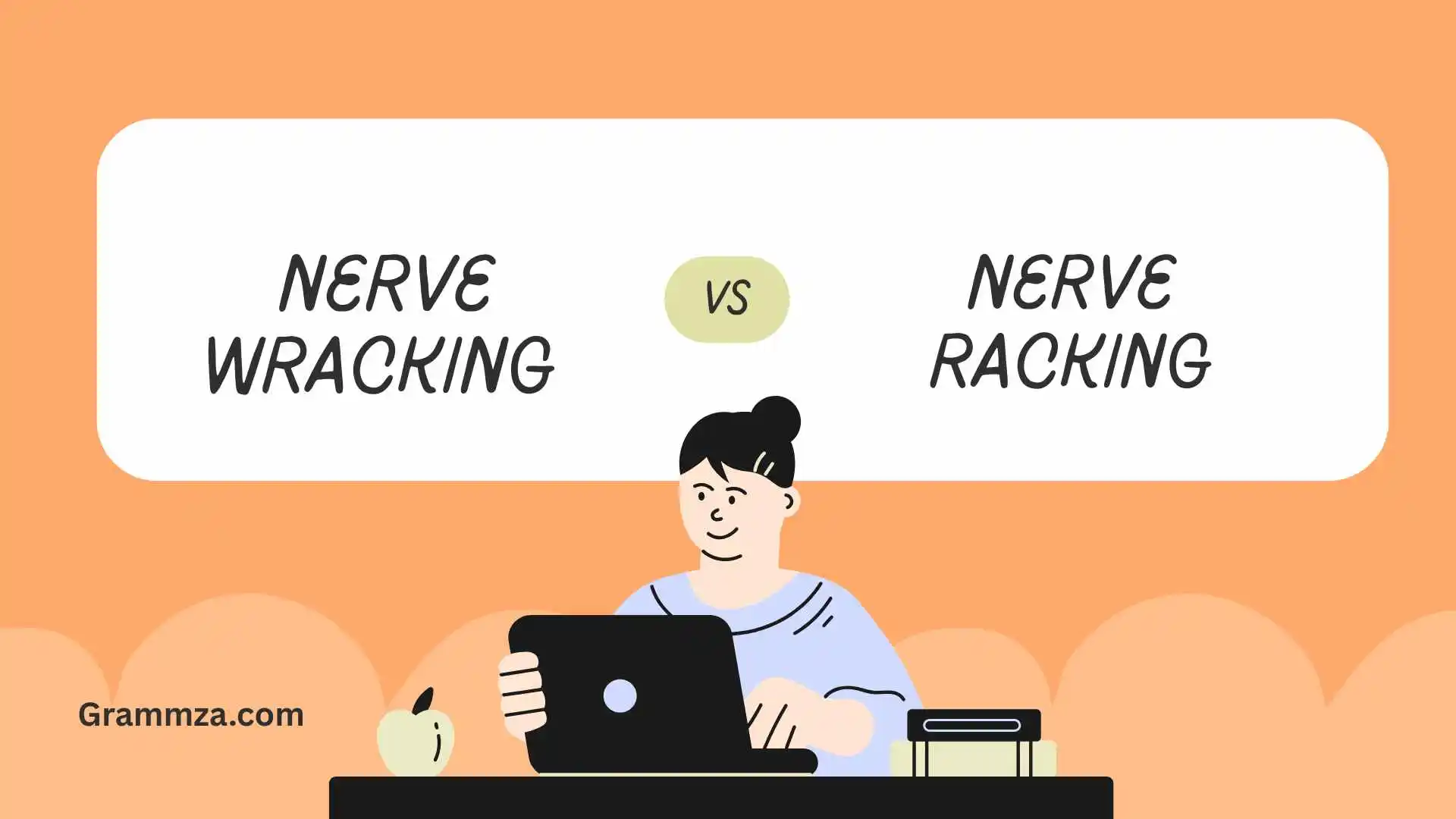
Many English learners and even native speakers often get confused between “nerve wracking” or “nerve racking.” At first glance, both phrases look correct and are widely used in everyday conversations, writing, and even in media. This confusion happens because both expressions sound exactly the same and seem to carry similar meanings.
People frequently search for “nerve wracking or racking” because they want to use the correct phrase in formal writing, exams, emails, or professional communication. Using the wrong version can sometimes make your writing look less polished, especially in academic or business settings.
Understanding the correct usage is important because English relies heavily on context and accuracy. In this article, you will learn the difference between “wracking” and “racking,” which one is correct, how to use them properly, and easy tips to remember the difference forever.
Quick Answer
The correct and more widely accepted phrase is “nerve-racking.” It means something that causes stress, anxiety, or tension.
While “nerve-wracking” is sometimes used, it is considered less standard and less preferred in modern English.
Meaning and Definition of Nerve Wracking or Nerve Racking
Let’s break down the words to understand them better.
1. Nerve-Racking
Definition:
Something that causes stress, anxiety, or emotional tension.
Simple Explanation:
If something makes you feel very nervous or worried, it is nerve-racking.
Examples:
- Waiting for exam results is nerve-racking.
- The final minutes of the game were extremely nerve-racking.
2. Nerve-Wracking
Definition:
An alternative spelling of “nerve-racking,” but less commonly used.
Simple Explanation:
It has the same meaning but is not the preferred form in standard English.
Examples:
- The interview was nerve-wracking.
- Driving in heavy traffic can be nerve-wracking.
3. Rack vs Wrack (Base Words)
To understand better, let’s look at the root words:
Rack
- Means to stretch, strain, or torture (physically or mentally).
- Example: He racked his brain to find the answer.
Wrack
- Means destruction or ruin (less commonly used today).
- Example: The storm left the town in wrack and ruin.
Key Differences Between Nerve Wracking or Nerve Racking
Here are the main differences between nerve wracking or racking:
- Nerve-racking is the standard and preferred spelling.
- Nerve-wracking is less common but still sometimes used.
- “Rack” relates to stress or strain, which fits the meaning better.
- “Wrack” is more related to destruction, not stress.
- Most dictionaries and style guides recommend “nerve-racking.”
Comparison Table
| Word | Meaning | Usage | Example |
| Nerve-racking | Causing stress or anxiety | Standard and correct | The exam was nerve-racking. |
| Nerve-wracking | Same meaning but less preferred | Less common alternative | The wait was nerve-wracking. |
| Rack | To strain or stress | Common verb | I racked my brain for answers. |
| Wrack | Destruction or ruin | Rare usage | The storm caused wrack and ruin. |
Examples in Sentences
Here are more real-life examples to help you understand:
Using “Nerve-Racking”
- Public speaking can be nerve-racking for beginners.
- Watching a horror movie alone is nerve-racking.
- The job interview was very nerve-racking.
- Waiting for the doctor’s report felt nerve-racking.
Using “Nerve-Wracking”
- The roller coaster ride was nerve-wracking.
- It was a nerve-wracking experience to perform on stage.
- Traveling during a storm can be nerve-wracking.
👉 Even though both are used, “nerve-racking” is the safer and more correct choice.
Common Mistakes
Many people make mistakes when using these phrases. Let’s look at some:
❌ Incorrect Usage:
- The exam was nerve wracking. (missing hyphen)
- The situation was nerve-wracking (in formal writing, less preferred)
✅ Correct Usage:
- The exam was nerve-racking.
- Waiting for results is nerve-racking.
Other Mistakes:
- Confusing “rack” with “wrack”
- Using the wrong spelling in formal writing
- Forgetting the hyphen
Tips to Remember the Difference
Here are some easy tricks:
1. Think of “Rack = Stress”
If something causes stress, use rack → nerve-racking
2. “Wrack” Means Damage
Wrack relates to destruction, not stress → avoid it here
3. Use What You See More
Most books, websites, and dictionaries use nerve-racking
4. Remember the Phrase:
👉 “Rack your brain” = correct
👉 So, “nerve-racking” = correct
When to Use Each Word
Use “Nerve-Racking” When:
- You want to describe stress or anxiety
- Writing formal content
- Taking exams or writing essays
- Communicating professionally
Use “Nerve-Wracking” When:
- Informal writing (still acceptable)
- Personal messages or casual tone
👉 But again, “nerve-racking” is always the safer choice.
Grammar Rules (If Applicable)
Here are some simple grammar rules:
- Use a hyphen in “nerve-racking”
- It acts as an adjective
- It usually comes before a noun
Examples:
- A nerve-racking experience
- A nerve-racking situation
Without hyphen:
- The situation was nerve-racking ✔️ (still correct as predicate adjective)
Synonyms or Related Words
Here are some similar words you can use:
- Stressful
- Tense
- Anxiety-inducing
- Intense
- Pressure-filled
- Frightening
- Overwhelming
Example:
- The exam was stressful instead of nerve-racking.
Frequently Asked Questions (FAQs)
1. Is it nerve wracking or nerve racking?
The correct and preferred form is nerve-racking.
2. Is nerve-wracking wrong?
No, it is not completely wrong, but it is less standard and less preferred.
3. Why is nerve-racking more correct?
Because “rack” means to strain or stress, which matches the meaning of the phrase.
4. Should I use a hyphen in nerve-racking?
Yes, always use a hyphen when writing nerve-racking.
5. Can I use nerve-wracking in formal writing?
It’s better to avoid it and use nerve-racking instead.
6. What does nerve-racking mean?
It means something that causes stress, anxiety, or mental pressure.
Conclusion
The confusion between “nerve wracking or racking” is very common, but the correct and widely accepted form is “nerve-racking.” It clearly connects to the idea of stress and mental strain, making it the better choice in both formal and informal writing.
While “nerve-wracking” is sometimes used, it is less preferred and may not be suitable for professional or academic contexts. By remembering simple tips like “rack = stress,” you can easily avoid mistakes and improve your English writing.
Keep practicing, and soon this confusion will be completely gone!