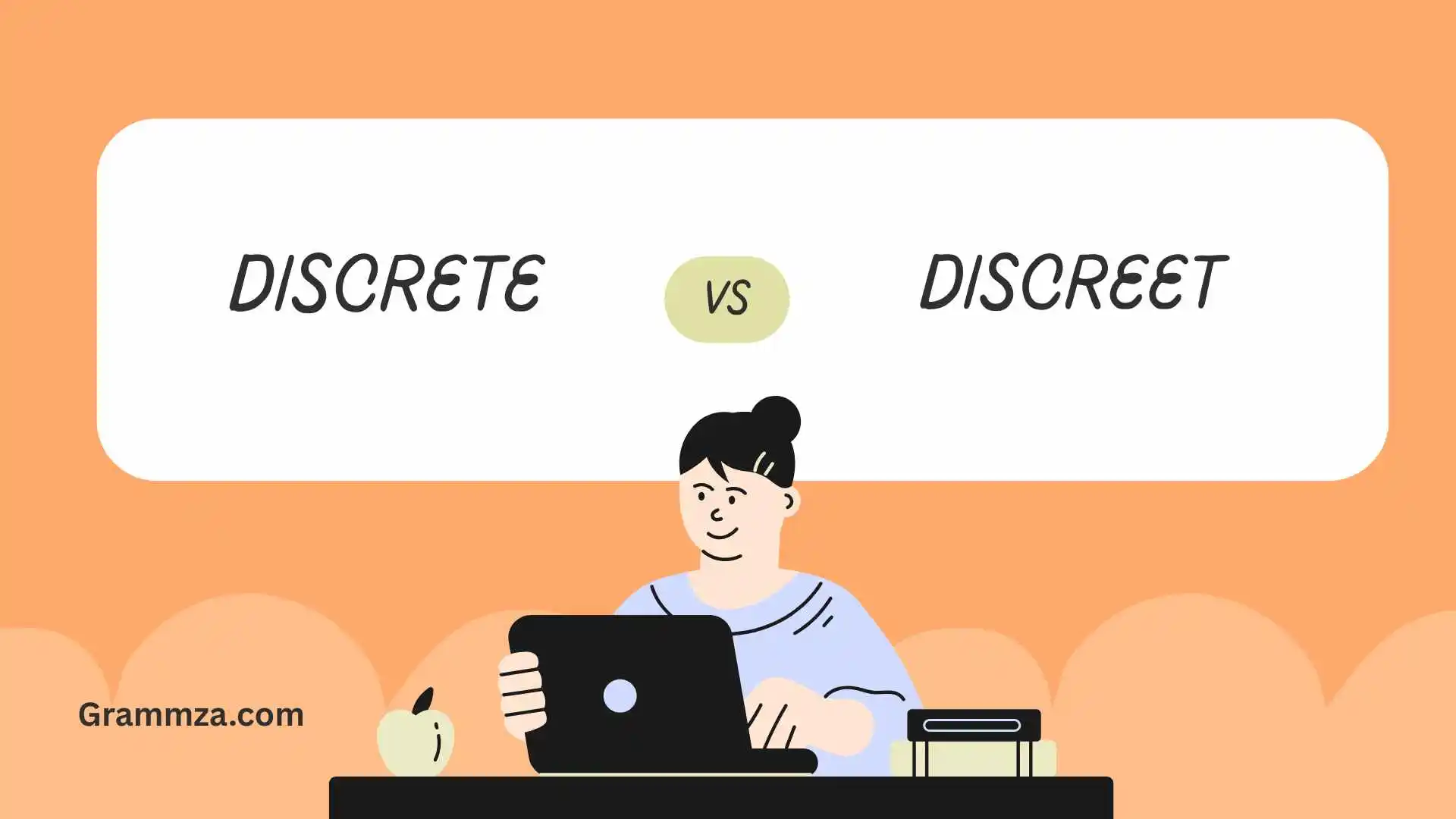
Many English learners and even native speakers often get confused between “discrete” and “discreet.” These two words look very similar, sound almost the same, and are easy to mix up while writing or speaking. Because of this similarity, people frequently search for “discrete or discreet” to understand which one is correct in different situations.
The confusion mainly happens because both words come from the same Latin root and share a similar spelling. However, their meanings are completely different. Using the wrong one can change the meaning of your sentence or make your writing look unprofessional.
Understanding the difference between “discrete” and “discreet” is important for clear communication, especially in academic writing, business communication, and everyday conversations. In this article, you’ll learn the meanings, differences, examples, common mistakes, and simple tips to remember which word to use.
Quick Answer
“Discrete” means separate or distinct, while “discreet” means careful, quiet, or private.
Use “discrete” when talking about things that are individually separate, and use “discreet” when describing someone who is careful not to attract attention.
Meaning and Definition of Discrete or Discreet
What Does “Discrete” Mean?
Definition:
“Discrete” means separate, individual, or distinct from others.
Simple Explanation:
When something is divided into parts and each part is different or separate, it is called discrete.
Example Sentences:
- The data is divided into discrete categories.
- The project has several discrete phases.
- Each student completed a discrete task.
What Does “Discreet” Mean?
Definition:
“Discreet” means careful, private, or avoiding attention.
Simple Explanation:
When someone behaves in a quiet and careful way, especially to keep something secret, they are being discreet.
Example Sentences:
- Please be discreet about this information.
- The staff handled the situation in a discreet manner.
- He gave her a discreet nod.
Key Differences Between Discrete and Discreet
Here are the main differences explained in a simple way:
- Meaning:
- Discrete = Separate or distinct
- Discreet = Careful or private
- Discrete = Separate or distinct
- Usage:
- Discrete is used for things (data, items, steps)
- Discreet is used for people or behavior
- Discrete is used for things (data, items, steps)
- Context:
- Discrete is common in math, science, and technical writing
- Discreet is common in social and personal situations
- Discrete is common in math, science, and technical writing
- Focus:
- Discrete focuses on separation
- Discreet focuses on secrecy or caution
- Discrete focuses on separation
Comparison Table
| Word | Meaning | Usage | Example |
| Discrete | Separate or distinct | Things, data, categories | The system has discrete components. |
| Discreet | Careful and private | People, behavior | She was discreet about the issue. |
Examples in Sentences
“Discrete”
- The report is divided into discrete sections.
- These are discrete variables in mathematics.
- The machine has several discrete parts.
- Each issue was handled as a discrete case.
- The course covers discrete topics.
“Discreet”
- He made a discreet exit from the party.
- The doctor was discreet about the patient’s condition.
- She asked a discreet question.
- Please keep this conversation discreet.
- The manager handled the complaint discreetly.
Common Mistakes
Many people confuse these two words because they look similar. Let’s look at common mistakes:
Incorrect vs Correct Usage
❌ Incorrect:
- Please be discrete about this matter.
✔ Correct: - Please be discreet about this matter.
❌ Incorrect:
- The data is discreet and organized.
✔ Correct: - The data is discrete and organized.
Why These Mistakes Happen
- Similar spelling causes confusion
- Same pronunciation in some accents
- Lack of understanding of meaning
Tips to Remember the Difference
Here are some simple tricks to help you remember:
1. “Discrete” = Separate
Think of “discrete” as “dis-CRETE” → “sepaRATE”
Both have the idea of separation.
2. “Discreet” = Secret
Think of “discreet” → contains “ee” like “keep seecret”
So it relates to privacy and secrecy.
3. Letter Trick
- Discrete → has “t” → think “things” (objects, items)
- Discreet → has double “e” → think “eyes” (being careful, watching)
When to Use Each Word
Use “Discrete” When:
- Talking about separate items or parts
- Referring to data or categories
- Describing distinct steps or stages
Examples:
- The process has discrete steps.
- The graph shows discrete values.
Use “Discreet” When:
- Talking about privacy or secrecy
- Describing careful behavior
- Referring to avoiding attention
Examples:
- She was discreet with sensitive information.
- He made a discreet phone call.
Grammar Rules (if applicable)
While “discrete” and “discreet” are adjectives, they follow normal adjective rules in English:
- They come before nouns:
- A discrete system
- A discreet approach
- A discrete system
- They can be used after linking verbs:
- The data is discrete
- She is discreet
- The data is discrete
- Adverb form:
- Discreet → discreetly
- He spoke discreetly
- He spoke discreetly
- Discrete → rarely used as adverb (not common)
- Discreet → discreetly
Synonyms or Related Words
“Discrete”
- Separate
- Distinct
- Individual
- Independent
- Unconnected
“Discreet”
- Careful
- Private
- Cautious
- Secretive
- Tactful
Frequently Asked Questions (FAQs)
1. What is the difference between discrete and discreet?
“Discrete” means separate, while “discreet” means careful or private.
2. Is discrete used in math?
Yes, “discrete” is commonly used in math to describe separate values, such as in discrete mathematics.
3. Can discreet be used for objects?
No, “discreet” is usually used for people or behavior, not objects.
4. How do I remember discrete vs discreet?
Remember:
- Discrete = Separate
- Discreet = Secret
5. Are discrete and discreet pronounced the same?
They are pronounced very similarly, which is why people often confuse them.
6. Which word should I use for privacy?
Use “discreet” when talking about privacy or being careful.
Conclusion
The difference between “discrete” and “discreet” is simple once you understand their meanings. Discrete refers to things that are separate or distinct, while discreet describes careful and private behavior. Even though these words look alike, using the correct one is important for clear communication.
By remembering simple tricks like “discrete = separate” and “discreet = secret” you can avoid common mistakes. With practice, choosing the right word will become easy and natural.

I am Daniel Harper, a passionate grammar writer dedicated to making English simple and easy to understand. I focus on breaking down confusing rules into clear, practical lessons. I enjoy helping readers improve their writing skills with confidence and clarity. My goal is to make grammar learning smooth, engaging, and useful for everyone.