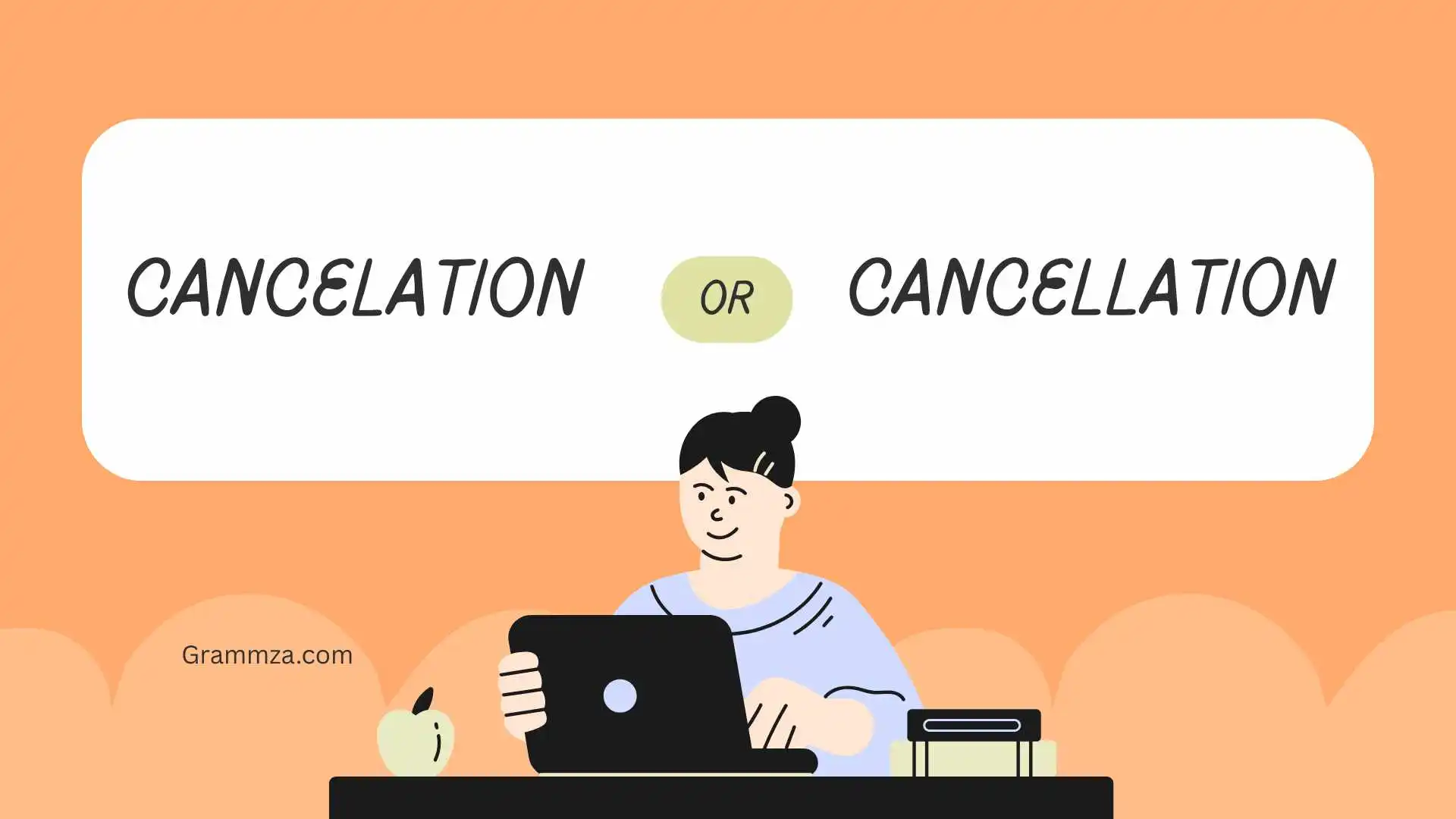
Many English learners and even native speakers often get confused between “cancelation” and “cancellation.” At first glance, both words look correct, and honestly, you may have seen both versions used online, in emails, or even in official documents. This confusion leads thousands of people to search for “cancelation or cancellation” every day.
The main reason behind this confusion is spelling variation, especially between American and British English. English is full of words that change slightly depending on region, and this is one of those tricky cases. Because spelling affects writing clarity and professionalism, understanding the correct usage is very important especially for students, writers, and professionals.
In this article, you will learn the exact difference between cancelation and cancellation, their meanings, correct usage, examples, grammar rules, and easy tips to remember them. By the end, you’ll never be confused about this pair again.
Quick Answer
“Cancellation” is the correct and widely accepted spelling in both American and British English.
“Cancelation” is considered a less common or alternative spelling, mainly seen in American English, but it is rarely used.
👉 In most situations, you should use “cancellation” to stay safe and correct.
Meaning and Definition of Each Word
1. Cancellation
Definition:
Cancellation is a noun that means the act of stopping or calling off something that was planned.
Simple Explanation:
When something is canceled, the action itself is called “cancellation.”
Examples:
- The cancellation of the flight caused frustration.
- We received a refund after the event cancellation.
- The meeting’s cancellation was unexpected.
2. Cancelation
Definition:
Cancelation has the same meaning as cancellation it refers to the act of canceling something.
Simple Explanation:
It is simply a different spelling of the same word, but much less common.
Examples:
- The cancelation policy is strict.
- We were informed about the cancelation late.
👉 However, these sentences would look more natural with “cancellation.”
Key Differences Between Cancelation and Cancellation
Here are the main differences you should understand:
- Spelling:
- Cancellation → Double “l” (standard and correct)
- Cancelation → Single “l” (less common)
- Usage:
- Cancellation → Widely used worldwide
- Cancelation → Rarely used
- Acceptance:
- Cancellation → Accepted in both US and UK English
- Cancelation → Mostly avoided in formal writing
- Professional Writing:
- Cancellation → Preferred choice
- Cancelation → Not recommended
Comparison Table
| Word | Meaning | Usage | Example Sentence |
| Cancellation | Act of canceling something | Standard and widely accepted | The cancellation was announced yesterday |
| Cancelation | Same meaning as cancellation | Rare and less preferred | The cancelation notice came late |
Examples in Sentences
Using “Cancellation” (Correct Form)
- The cancellation of the concert disappointed fans.
- There is a fee for last-minute cancellation.
- Flight cancellation happens due to bad weather.
- The hotel confirmed our cancellation request.
- Her appointment cancellation freed up time.
Using “Cancelation” (Less Common)
- The cancelation policy must be read carefully.
- We received a cancelation email.
👉 Again, it is better to replace these with “cancellation.”
Common Mistakes
Here are some mistakes people often make:
❌ Incorrect:
- The cancelation of the event was sudden.
- Please read the cancelation policy carefully.
✅ Correct:
- The cancellation of the event was sudden.
- Please read the cancellation policy carefully.
❌ Mistake: Mixing both spellings
- The cancellation and cancelation rules are different.
✅ Correct:
- The cancellation rules are different.
❌ Mistake: Assuming both are equally common
Many people think both spellings are equally used, but this is not true.
✅ Correct Understanding:
- “Cancellation” is far more common and preferred.
Tips to Remember the Difference
Here are some easy tricks to help you remember:
1. Double “L” Rule
Think: Cancel → Cancellation (double L stays)
If the base word has “ll,” keep it when adding “-ation.”
2. Follow the Majority
Most books, websites, and dictionaries use “cancellation.”
👉 So always choose the more common form.
3. Keep It Simple
When in doubt, use “cancellation.”
It will always be correct.
4. Think of Similar Words
- Travel → Travelling
- Cancel → Cancellation
👉 Notice the double letters.
When to Use Each Word
Use “Cancellation” When:
- Writing emails or formal letters
- Creating academic content
- Writing blogs or articles
- Filling out official forms
- Communicating professionally
👉 This is the safest and correct option in all cases.
Use “Cancelation” When:
- Rarely used in informal or outdated American texts
- Quoting old material or specific style guides
👉 But generally, avoid using it.
Grammar Rules (Important Insight)
The confusion comes from how English handles double consonants when adding suffixes like “-ation.”
Rule:
In many cases, when a verb ends in “l,” the “l” is doubled before adding a suffix.
Example:
- Cancel → Cancellation
- Travel → Travelling
👉 This rule is followed more consistently in British English but is also widely accepted in American English for this word.
Synonyms or Related Words
Here are some related words you can use instead of “cancellation”:
- Termination
- Withdrawal
- Revocation
- Annulment
- Abandonment
- Suspension
Example:
- The event was canceled → The event faced termination.
Frequently Asked Questions (FAQs)
1. Is cancelation a correct spelling?
Yes, but it is very rare. “Cancellation” is the correct and preferred spelling.
2. Which is more common: cancelation or cancellation?
“Cancellation” is much more common and widely used worldwide.
3. Is cancellation used in both US and UK English?
Yes, “cancellation” is accepted in both American and British English.
4. Why do people write cancelation?
Some people simplify the spelling by using a single “l,” but it is not standard.
5. Should I use cancelation in formal writing?
No. Always use “cancellation” in formal and professional writing.
6. Does cancel come from American or British English?
“Cancel” is used in both, but spelling rules may vary slightly. Still, “cancellation” is the standard noun form.
Conclusion
The confusion between cancelation or cancellation is very common, but the solution is simple. While both spellings exist, “cancellation” is the correct, standard, and widely accepted form in modern English. It works perfectly in both American and British English and should always be your first choice.
On the other hand, “cancelation” is rarely used and can make your writing look less professional. So, to avoid mistakes and ensure clarity, always stick with “cancellation.”
👉 Remember: When in doubt, double the “l” and go with confidence!
READ MORE ARTICLES LIKE THIS..
Color Grey or Gray: British vs American English Explained 2026
Weather or Not: Understanding the Difference 2026
Judgment or Judgement: Which One Is Correct? simple guide 2026
Cancelling or Canceling: Which Spelling Is Correct?2026
Use to or Used to: Simple Guide to Understand the Difference. 2026