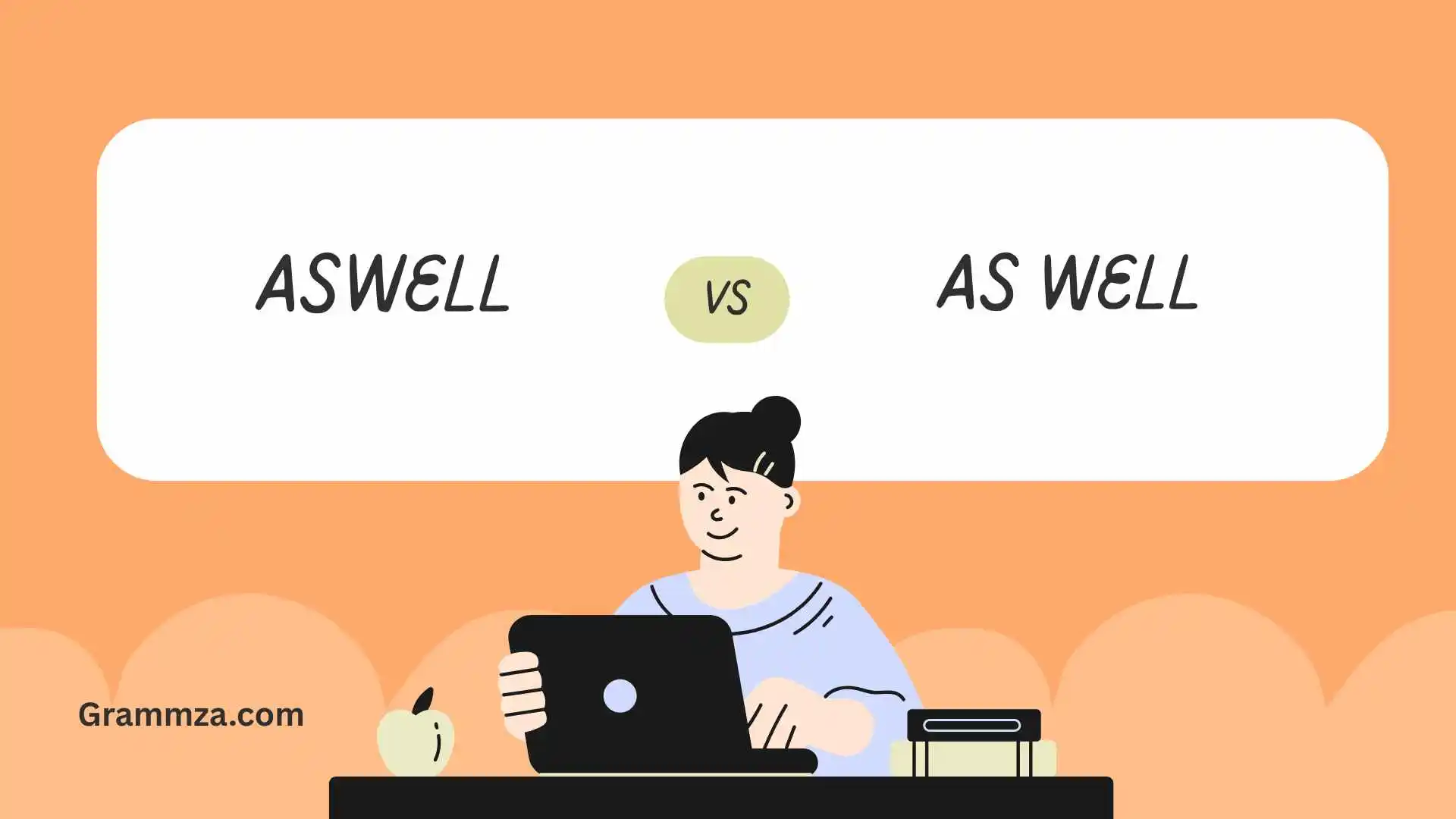
Many English learners and even native speakers often get confused between “aswell” or “as well.” At first glance, both may look correct, but only one is actually accepted in standard English. This confusion usually happens because the phrase is commonly used in speech, and people assume it can be written as one word.
People search for “aswell or as well” because they want to improve their writing, avoid mistakes, and sound more professional. Whether you’re writing emails, essays, or social media posts, using the correct form makes a big difference in clarity and credibility.
Understanding the correct usage is important because small grammar mistakes can change how others perceive your writing. In this article, you’ll learn the correct form, meanings, examples, grammar rules, common mistakes, and simple tips to remember the difference.
Quick Answer
The correct form is “as well” (two separate words).
“Aswell” is incorrect and is not accepted in standard English.
Use “as well” when you want to say “also” or “too,” usually at the end of a sentence.
Meaning and Definition of Aswell or As Well
1. As Well (Correct Form)
Definition:
“As well” means also, too, or in addition.
Explanation:
It is a phrase used to add extra information. It usually appears at the end of a sentence.
Examples:
- I will come to the party as well.
- She speaks English and Spanish as well.
- Can I join you as well?
2. Aswell (Incorrect Form)
Definition:
“Aswell” is not a real word in standard English.
Explanation:
It is a common spelling mistake. Even though it may appear in informal writing or online, it should be avoided in correct English.
Examples (Incorrect):
- I want to come aswell. ❌
- She can help aswell. ❌
Correct Version:
- I want to come as well. ✔️
- She can help as well. ✔️
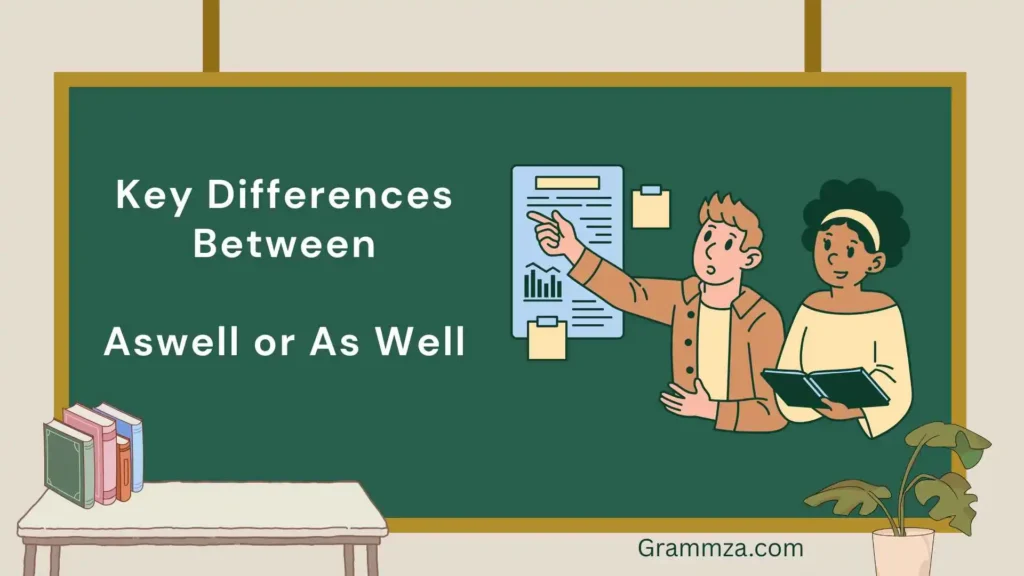
Key Differences Between the Words
Here are the main differences between “aswell” or “as well”:
- ✅ “As well” is correct and widely accepted in English.
- ❌ “Aswell” is incorrect and should not be used.
- “As well” is a phrase, not a single word.
- It is commonly used at the end of a sentence.
- It has the same meaning as “too” or “also.”
Comparison Table
| Word | Meaning | Usage | Example |
| As well | Also / Too | Correct phrase | I will join you as well. |
| Aswell | Not a real word | Incorrect usage | ❌ I will join you aswell. |
Examples in Sentences
Using “As Well” Correctly
- I like coffee, and I like tea as well.
- He is coming to the meeting as well.
- She bought a dress and shoes as well.
- We will visit the museum as well.
- They invited me to dinner as well.
More Real-Life Examples
- Can you bring your laptop as well?
- I finished my homework and helped my friend as well.
- She sings beautifully and dances as well.
- I want to learn French as well.
- He fixed the car and cleaned it as well.
Common Mistakes
Many learners make simple mistakes when using “aswell or as well.” Let’s look at them:
1. Writing It as One Word
❌ Incorrect: I will go aswell.
✔️ Correct: I will go as well.
2. Using It in the Wrong Position
“As well” is usually placed at the end of a sentence.
❌ Incorrect: I as well will go.
✔️ Correct: I will go as well.
3. Confusing It with “Also”
“As well” is more natural at the end, while “also” is used in the middle.
✔️ I will also go.
✔️ I will go as well.
4. Overusing It
Sometimes, people use “as well” too often in writing.
❌ I like apples as well and bananas as well.
✔️ I like apples and bananas as well.
Tips to Remember the Difference
Here are some simple tricks to remember:
✅ Tip 1: Two Words Always
If you’re writing it, remember:
👉 It is always “as well”, never one word.
✅ Tip 2: Replace with “Too”
If you can replace it with “too,” then “as well” is correct.
- I want to come too → I want to come as well
✅ Tip 3: Use It at the End
Most of the time, place it at the end of the sentence.
✅ Tip 4: Think of It as a Phrase
“As well” is not a single word it’s a phrase.
When to Use Each Word
When to Use “As Well”
Use “as well” when you want to:
- Add extra information
- Say “also” or “too”
- Include something additional
Examples:
- I will study tonight as well.
- She is coming with us as well.
When to Use “Aswell”
👉 Never use “aswell” in formal or correct English.
It may appear in:
- Informal chats
- Typing mistakes
- Social media posts
But it is not correct and should be avoided.
Grammar Rules
Here are some basic grammar rules for “as well”:
1. It Is an Adverbial Phrase
“As well” works like an adverb, adding extra meaning.
2. Sentence Position
- Usually at the end of a sentence
- Rarely used at the beginning
✔️ She is coming as well.
❌ As well, she is coming. (awkward)
3. No Comma Needed
You usually don’t need a comma before “as well.”
✔️ I will come as well.
❌ I will come, as well.
4. Informal Tone
“As well” is slightly more informal than “also,” but still widely accepted.
Synonyms or Related Words
Here are some alternatives to “as well”:
- Too
- Also
- In addition
- Besides
- Along with that
Examples:
- I will join too.
- I will also join.
- I will join as well.
All mean nearly the same thing but are used in different positions.
Frequently Asked Questions (FAQs)
1. Is “aswell” ever correct?
No, “aswell” is never correct in standard English.
2. Why do people write “aswell”?
People often write it by mistake because it sounds like one word when spoken.
3. Can I use “as well” at the beginning of a sentence?
It is not common and may sound unnatural. It’s better to use it at the end.
4. What is the difference between “also” and “as well”?
“Also” is usually used in the middle of a sentence, while “as well” is used at the end.
5. Is “as well” formal or informal?
It is slightly informal but still acceptable in most types of writing.
6. Can I use “too” instead of “as well”?
Yes, both have the same meaning, but “too” is more casual.
Conclusion
To sum up, when it comes to “aswell or as well,” the correct form is always “as well” (two words). The single-word version “aswell” is simply a common mistake and should be avoided in proper writing.
“As well” is an easy and useful phrase that means “also” or “too.” By remembering that it is always written as two separate words and usually placed at the end of a sentence, you can avoid errors and improve your English.
Keep practicing with simple sentences, and soon using “as well” correctly will feel natural.

I am Daniel Harper, a passionate grammar writer dedicated to making English simple and easy to understand. I focus on breaking down confusing rules into clear, practical lessons. I enjoy helping readers improve their writing skills with confidence and clarity. My goal is to make grammar learning smooth, engaging, and useful for everyone.