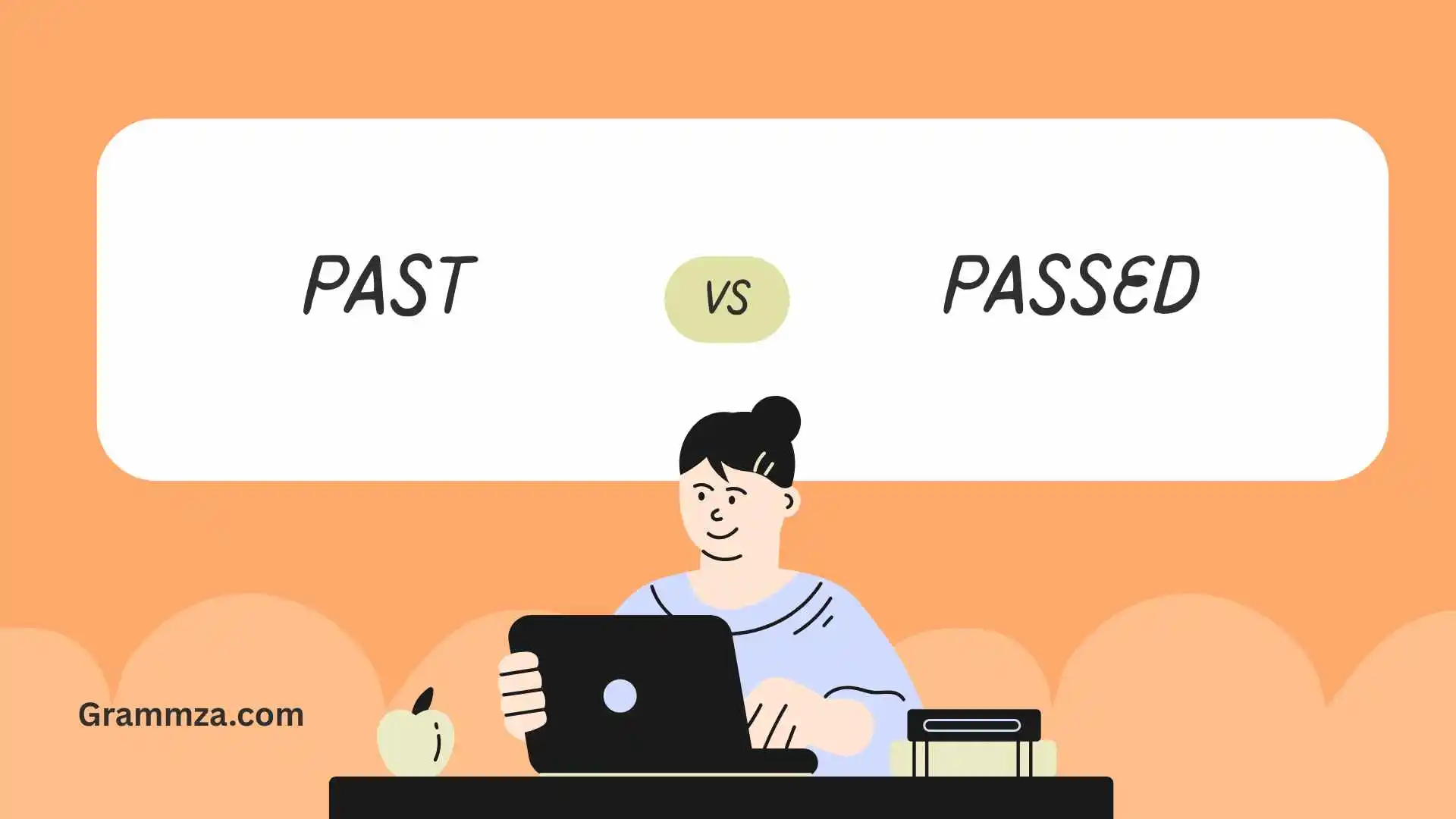
Many English learners and even native speakers often get confused between “past” and “passed.” These two words sound exactly the same, which makes them tricky to use in writing. Because they are homophones (words that sound alike but have different meanings), it’s easy to mix them up without realizing it.
People frequently search for “past or passed” because they want to avoid common grammar mistakes. Whether you’re writing an email, an essay, or a social media post, using the wrong word can change the meaning of your sentence and make your writing look less professional.
Understanding the difference between “past” and “passed” is important for clear communication. In this article, you’ll learn simple definitions, examples, grammar rules, and easy tips to remember which word to use. By the end, you’ll feel confident using both words correctly.
Quick Answer
“Past” is usually a noun, adjective, preposition, or adverb that refers to time before now or something that has already happened.
“Passed” is the past tense of the verb “pass,” meaning to move, go by, or succeed in something.
Meaning and Definition of Each Word
What Does “Past” Mean?
“Past” refers to a time that has already happened or something that is no longer current. It can be used in different ways:
- As a noun: A time before now
- As an adjective: Something that has already happened
- As a preposition: Movement beyond something
- As an adverb: Referring to time gone by
Examples:
- The past cannot be changed. (noun)
- She told me about her past experiences. (adjective)
- He walked past the school. (preposition)
- It’s already past midnight. (adverb)
What Does “Passed” Mean?
“Passed” is the past tense of the verb “pass.” It shows that an action has already happened.
It can mean:
- To move from one place to another
- To go by something
- To succeed in a test or exam
- To give something to someone
Examples:
- She passed me on the road.
- He passed the exam with good marks.
- The car passed the bus quickly.
- I passed the salt to my friend.
Key Differences Between the Words
Here are the main differences between past and passed:
- Part of speech:
- “Past” = noun, adjective, adverb, or preposition
- “Passed” = verb (past tense)
- Meaning:
- “Past” = related to time or something finished
- “Passed” = an action that already happened
- Usage:
- “Past” does NOT show action
- “Passed” ALWAYS shows action
- Grammar role:
- “Past” describes or refers
- “Passed” performs an action
Comparison Table
| Word | Meaning | Usage | Example |
| Past | Time before now / beyond | Noun, adj, adv, preposition | We talked about the past. |
| Passed | Past tense of “pass” (action) | Verb | She passed the test easily. |
Examples in Sentences
“Past”
- I cannot forget my past.
- The movie is based on past events.
- He walked past me without speaking.
- It’s past your bedtime.
- She has learned from her past mistakes.
“Passed”
- She passed me in the hallway.
- He passed his driving test.
- The teacher passed out the papers.
- The train passed the station quickly.
- Time passed very slowly during the wait.
Common Mistakes
Here are some common mistakes people make with past or passed:
1 Incorrect:
- He past me on the road.
✔️ Correct: - He passed me on the road.
2 Incorrect:
- It is already passed midnight.
✔️ Correct: - It is already past midnight.
3 Incorrect:
- She has a difficult passed.
✔️ Correct: - She has a difficult past.
4 Incorrect:
- He past the exam.
✔️ Correct: - He passed the exam.
Tips to Remember the Difference
Here are simple tricks to help you remember:
1. Think of Action
If the sentence shows action, use “passed.”
👉 Example: He passed the ball.
2. Look for Time
If the sentence talks about time, use “past.”
👉 Example: In the past, people wrote letters.
3. Remember the “-ed” Rule
Words ending in -ed are usually verbs in the past tense.
👉 “Passed” = action already done
4. Replace Trick
Try replacing the word with “went” or “moved”:
- If it works → use passed
- If not → use past
When to Use Each Word
Use “Past” When:
- Talking about time before now
- Referring to something finished
- Showing position (beyond something)
Examples:
- That is all in the past.
- He walked past the shop.
Use “Passed” When:
- Describing an action that already happened
- Talking about movement
- Referring to success in tests or exams
Examples:
- She passed the ball.
- He passed his exams.
Grammar Rules
Here are some simple grammar rules:
1. “Passed” is Always a Verb
It must be connected to an action.
👉 Correct: She passed the test.
2. “Past” Has Multiple Uses
It can be:
- Noun → The past
- Adjective → Past events
- Preposition → Walk past
- Adverb → Past midnight
3. Watch Sentence Structure
If the sentence needs a verb, you must use passed, not past.
Synonyms or Related Words
“Past”
- Previous
- Former
- Earlier
- Gone
“Passed”
- Moved
- Went
- Completed
- Succeeded
Frequently Asked Questions (FAQs)
1. What is the main difference between past and passed?
“Past” refers to time or something finished, while “passed” is a verb showing an action.
2. Can “past” be used as a verb?
No, “past” is not a verb. It cannot show action.
3. Is “passed” always a verb?
Yes, “passed” is always the past tense of the verb “pass.”
4. Which one is correct: past away or passed away?
The correct phrase is “passed away” (meaning someone died).
5. How do I know which one to use?
Check if the sentence shows action:
- Action → passed
- No action / time → past
6. Is it “past midnight” or “passed midnight”?
Correct: past midnight (because it refers to time).
Conclusion
Understanding the difference between past or passed is easier than it seems once you know the basics. “Past” is about time or something already finished, while “passed” is an action that has happened.
By remembering simple tips like associating “passed” with action and “past” with time you can avoid common mistakes. With a little practice, you’ll be able to use both words confidently in your writing and speech.

I am Daniel Harper, a passionate grammar writer dedicated to making English simple and easy to understand. I focus on breaking down confusing rules into clear, practical lessons. I enjoy helping readers improve their writing skills with confidence and clarity. My goal is to make grammar learning smooth, engaging, and useful for everyone.