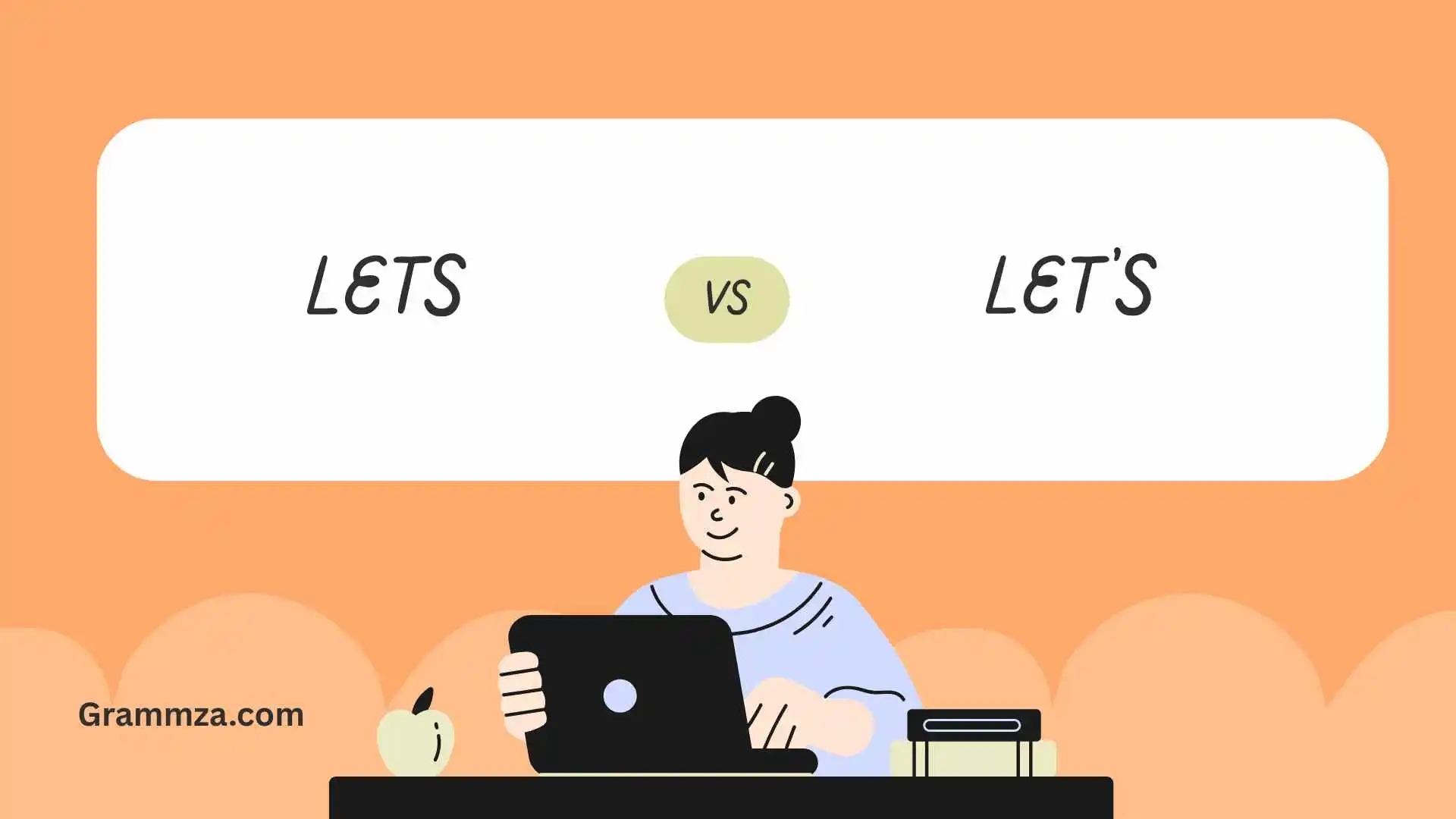
Many English learners and even native speakers often get confused between “lets” and “let’s.” At first glance, these two words look almost identical. The only visible difference is a small apostrophe. But in English grammar, that tiny mark can completely change the meaning of a word.
People search for “lets or let’s” because they want to write correctly in emails, social media, school assignments, or professional content. Using the wrong form can make your writing look careless or confusing. For example, writing “Lets go!” instead of “Let’s go!” might seem like a small mistake, but it changes the grammatical structure of your sentence.
In this article, you will learn everything about lets vs let’s in a simple and easy way. We will explain their meanings, differences, examples, grammar rules, and common mistakes. By the end, you will confidently know when to use each one.
Quick Answer
“Let’s” is a contraction of “let us” and is used to suggest doing something together.
“Lets” is the third-person singular form of the verb “let,” meaning allows or permits.
👉 Example:
- Let’s go to the park. (Let us go together)
- She lets her kids play outside. (She allows them)
Meaning and Definition of Each Word
1. What Does “Let’s” Mean?
“Let’s” = Let us
It is a contraction used to make suggestions, offers, or invitations.
Simple Explanation:
Use “let’s” when you are including yourself and others in an action.
Examples:
- Let’s eat dinner together.
- Let’s watch a movie tonight.
- Let’s start the meeting now.
2. What Does “Lets” Mean?
“Lets” = Verb (from “let”)
It is the third-person singular form used with subjects like he, she, it.
Simple Explanation:
Use “lets” when talking about someone allowing something to happen.
Examples:
- He lets his dog run in the garden.
- She lets me borrow her books.
- The teacher lets students ask questions.
Key Differences Between Lets and Let’s
Here are the main differences to remember:
- “Let’s” includes you and others (means “let us”)
- “Lets” talks about someone allowing something
- “Let’s” always has an apostrophe
- “Lets” never has an apostrophe
- “Let’s” is used for suggestions or invitations
- “Lets” is used as a verb in sentences
Comparison Table
| Word | Meaning | Usage | Example |
| Let’s | Let us | Suggestion or invitation | Let’s go for a walk. |
| Lets | Allows or permits | Verb (he/she/it form of “let”) | She lets him play outside. |
Examples in Sentences
“Let’s”
- Let’s go shopping this weekend.
- Let’s learn something new today.
- Let’s help each other.
- Let’s take a break.
- Let’s finish this project together.
“Lets”
- He lets his sister use his phone.
- She lets her children watch TV.
- My boss lets me work from home.
- The coach lets players rest after practice.
- This app lets you edit photos easily.
Common Mistakes
Many learners confuse these two forms. Here are some common mistakes:
❌ Incorrect vs ✅ Correct
- ❌ Lets go to the party.
✅ Let’s go to the party. - ❌ She let’s me use her laptop.
✅ She lets me use her laptop. - ❌ Lets start the class.
✅ Let’s start the class. - ❌ He lets go to the park.
✅ Let’s go to the park.
👉 Tip: If you can replace it with “let us,” then use let’s.
Tips to Remember the Difference
Here are some easy tricks:
1 Trick: Expand the Word
- If you can say “let us”, use let’s
→ Let’s go = Let us go
2 Trick: Look for the Subject
- If the subject is he, she, or it, use lets
→ She lets me speak
3 Trick: Apostrophe Rule
- Apostrophe = missing letters
- “Let’s” = “let us”
4 Trick: Suggestion vs Action
- Suggestion → Let’s
- Permission → Lets
When to Use Each Word
Use “Let’s” When:
- You are making a suggestion
- You are inviting someone
- You include yourself in the action
Examples:
- Let’s go out for dinner.
- Let’s try something new.
- Let’s solve this problem together.
Use “Lets” When:
- You describe permission or allowance
- You talk about someone else’s action
- The subject is he/she/it
Examples:
- He lets me drive his car.
- She lets her kids stay up late.
- The system lets users create accounts.
Grammar Rules (Important Points)
1. Contractions Use Apostrophes
- “Let’s” is a contraction of “let us”
- Apostrophe replaces the missing letter “u”
2. Verb Agreement
- “Lets” is used with singular third-person subjects
(he, she, it)
Example:
- He lets
- She lets
- It lets
3. Sentence Structure
- Let’s + base verb
→ Let’s eat
→ Let’s go - Subject + lets + object + verb
→ She lets him play
Synonyms or Related Words
While “lets” and “let’s” are unique, here are related words:
For “Let’s” (suggestions):
- Shall we
- Why don’t we
- How about
Example:
- Let’s go → Why don’t we go?
For “Lets” (permission):
- Allows
- Permits
- Gives permission
Example:
- She lets me go → She allows me to go
Frequently Asked Questions (FAQs)
1. Is “lets” correct without an apostrophe?
Yes, but only when used as a verb meaning allows.
2. What is the difference between lets and let’s?
“Let’s” means let us, while “lets” means allows.
3. Can I use lets at the beginning of a sentence?
Usually no, unless it fits grammatically:
- Correct: He lets me speak.
- Incorrect: Lets go outside.
4. Is “let’s” formal or informal?
It is commonly used in both informal and semi-formal English.
5. How do I know which one to use?
Try replacing it with “let us.”
- If it works → use let’s
- If not → use lets
6. Why is “let’s” more common in daily use?
Because people often make suggestions or invitations in conversation.
Conclusion
Understanding the difference between lets or let’s is simple once you know the rule.
“Let’s” means let us and is used for suggestions or group actions.
“Lets” is a verb that means allows and is used with he, she, or it.
Remember:
👉 Apostrophe = contraction (let’s = let us)
👉 No apostrophe = verb (lets = allows)
With practice, you’ll never confuse these two again. Keep using them in sentences, and soon it will become natural.