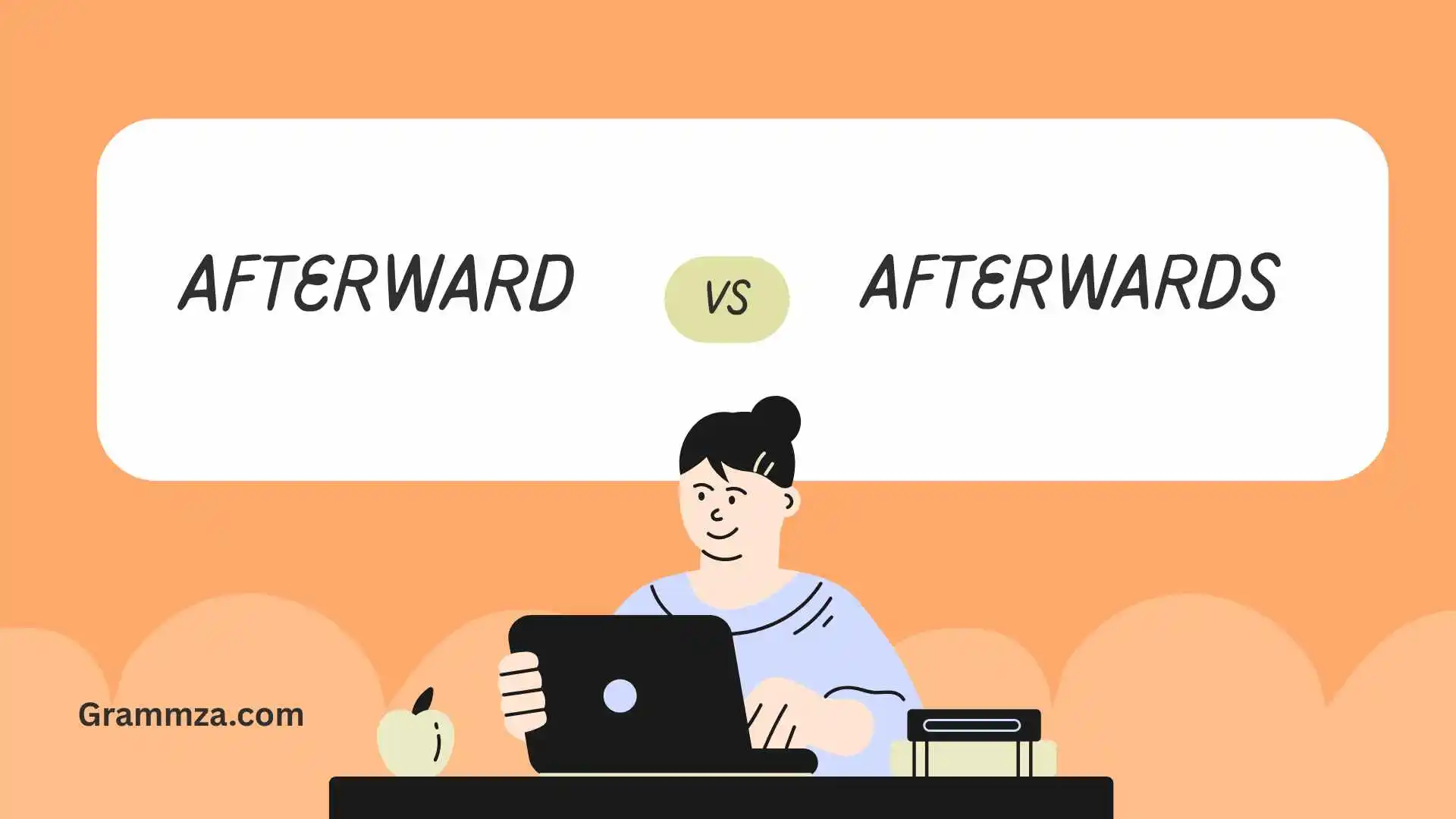
Many English learners and even native speakers often get confused between “afterward” or “afterwards.” At first glance, both words look almost identical, and they even sound the same when spoken. This small difference just an extra “s” at the end can make people wonder if one is correct and the other is wrong.
The confusion usually comes from differences in American English and British English. People searching for “afterward or afterwards” often want to know which one they should use in writing, emails, exams, or everyday conversations. Since both forms appear in books, websites, and media, it becomes even harder to decide.
Understanding the correct usage is important because it helps you write clearly and professionally. Whether you are a student, blogger, or content writer, using the right form can improve your communication skills. In this article, you will learn the meanings, differences, usage rules, examples, and simple tips to remember afterward vs afterwards easily.
Quick Answer
Both “afterward” and “afterwards” mean the same thing and are correct. The only difference is style:
- “Afterward” is more common in American English
- “Afterwards” is more common in British English
You can use either word depending on your audience or writing style.
Meaning and Definition of Each Word
What Does “Afterward” Mean?
Afterward is an adverb that means “at a later time” or “after something has happened.”
Simple Explanation:
It tells us that something happens later or following an event.
Examples:
- We went to the park and had dinner afterward.
- She finished her homework and relaxed afterward.
- He called me, and we talked afterward.
What Does “Afterwards” Mean?
Afterwards also means “at a later time” or “following an event.”
Simple Explanation:
It has the same meaning as “afterward,” just with a slightly different spelling.
Examples:
- They watched a movie and went for ice cream afterwards.
- We completed the meeting and discussed the results afterwards.
- She cleaned the house and rested afterwards.
Key Differences Between the Words
Even though the meanings are the same, there are small differences in usage:
- Spelling Difference:
- Afterward (no “s”)
- Afterwards (with “s”)
- Regional Preference:
- Afterward → American English 🇺🇸
- Afterwards → British English 🇬🇧
- Meaning:
- No difference at all
- Usage:
- Both are used as adverbs
- Formality:
- Both are equally formal and correct
Comparison Table
| Word | Meaning | Usage | Example |
| Afterward | At a later time | American English | We went home afterward. |
| Afterwards | At a later time | British English | We went home afterwards. |
Examples in Sentences
Here are more real-life examples to help you understand clearly:
Using “Afterward”
- I finished my work and took a nap afterward.
- He apologized, and everything was fine afterward.
- They had lunch and went shopping afterward.
- She completed her exam and felt relaxed afterward.
- We met at the café and talked afterward.
Using “Afterwards”
- We visited the museum and had tea afterwards.
- He gave a speech and answered questions afterwards.
- She finished cooking and cleaned the kitchen afterwards.
- They played football and rested afterwards.
- I watched a movie and went to sleep afterwards.
Common Mistakes
Many learners make small mistakes when using these words. Let’s look at them:
1. Thinking One is Wrong
❌ Incorrect: “Afterwards is wrong. Only afterward is correct.”
✅ Correct: Both are correct.
2. Mixing Styles in One Text
❌ Incorrect:
We went home afterward and ate dinner afterwards.
✅ Correct:
Use one style consistently:
We went home afterward and ate dinner afterward.
OR
We went home afterwards and ate dinner afterwards.
3. Using as a Noun
❌ Incorrect: I will see you in the afterward.
✅ Correct: I will see you afterward.
4. Confusing with “After”
❌ Incorrect: We went home after. (incomplete meaning)
✅ Correct: We went home afterward.
Tips to Remember the Difference
Here are some easy tricks:
- Think of “S” as “British Style”
- Afterwards → British English
- No “S” = Simple American Style
- Afterward → American English
- Same Meaning Rule:
If you know one, you know both! - Be Consistent:
Choose one style and stick to it in your writing
When to Use Each Word
Use “Afterward” When:
- Writing in American English
- Writing for US audiences
- Following American grammar rules
- Writing blogs, essays, or emails in US style
Use “Afterwards” When:
- Writing in British English
- Writing for UK audiences
- Following British grammar rules
- Preparing content for international readers (UK preference)
Grammar Rules (if applicable)
- Both words are adverbs
- They describe time
- They usually come at the end of a sentence
Examples:
- We went out afterward.
- She called me afterwards.
They can also appear in the middle of a sentence:
- We afterward realized our mistake.
- We afterwards realized our mistake.
Synonyms or Related Words
Here are some similar words you can use:
- Later
- Then
- After that
- Subsequently
- Following that
- Eventually
Examples:
- We finished dinner and went out later.
- She studied hard and succeeded eventually.
Frequently Asked Questions (FAQs)
1. Is “afterward” or “afterwards” correct?
Both are correct. The difference is only in regional usage (American vs British English).
2. Which one should I use in exams?
Use the version your exam follows:
- American English → afterward
- British English → afterwards
3. Do they have different meanings?
No, both words mean exactly the same.
4. Can I use both in the same sentence?
It’s better not to mix them. Choose one style and stay consistent.
5. Is “afterwards” more formal?
No, both are equally formal.
6. Which is more common?
- “Afterward” is common in the US
- “Afterwards” is common in the UK
Conclusion
The confusion between afterward or afterwards is very common, but the solution is simple. Both words have the same meaning and are grammatically correct. The only real difference lies in regional preference American English uses “afterward,” while British English prefers “afterwards.”
To avoid mistakes, just remember to stay consistent in your writing. Once you understand this small difference, you can confidently use either word in your daily communication.

I am Daniel Harper, a passionate grammar writer dedicated to making English simple and easy to understand. I focus on breaking down confusing rules into clear, practical lessons. I enjoy helping readers improve their writing skills with confidence and clarity. My goal is to make grammar learning smooth, engaging, and useful for everyone.