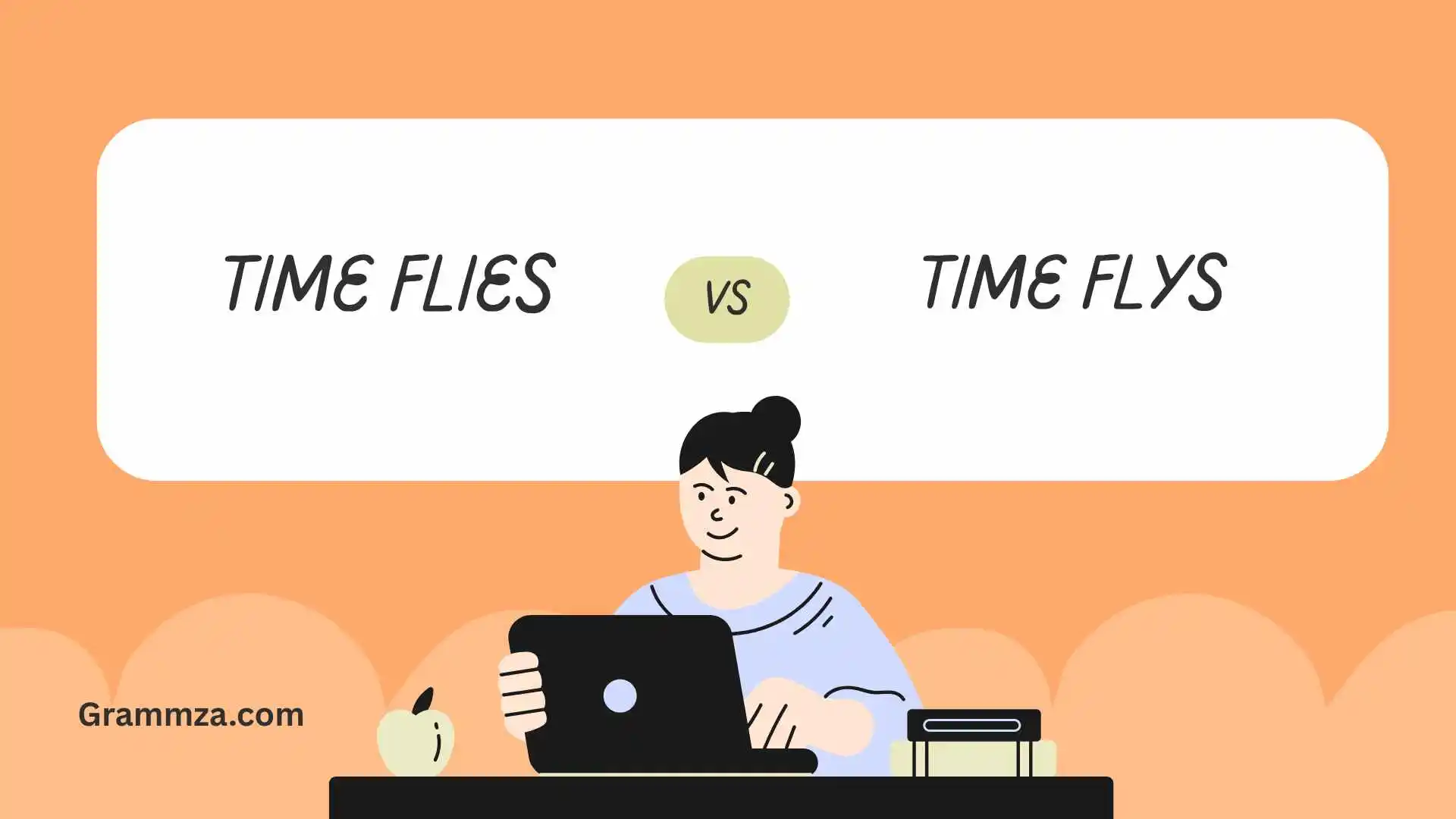
Many English learners and even native speakers often get confused between “time flies” and “time flys.” At first glance, both may look correct because they sound similar when spoken. However, only one of them is grammatically correct in standard English.
People search for “time flies or time flys” because they want to improve their writing, avoid mistakes, and sound more professional. Whether you are writing an email, an essay, or a social media post, using correct grammar is important. Even small errors like this can affect how others understand your message.
In this article, you will learn the correct usage, meanings, grammar rules, and simple tips to remember the difference between time flies and time flys. By the end, you will never confuse these words again.
Quick Answer
The correct phrase is “time flies.”
“Flies” is the correct verb form used with the singular subject “time.”
“Time flys” is incorrect because “flys” is not the proper verb spelling in this context.
Meaning and Definition of Time Flies or Time Flys
1. Time Flies
Definition:
“Time flies” means that time passes very quickly.
Explanation:
This phrase is commonly used to express how fast time feels, especially when you are enjoying something or are busy.
Examples:
- Time flies when you’re having fun.
- I can’t believe it’s already Friday time flies!
- Time flies during holidays.
2. Time Flys
Definition:
“Flys” is not a correct standard spelling of the verb “fly.”
Explanation:
The correct spelling for the verb form is “flies.”
“Flys” may appear as a mistake or typo, but it is not accepted in proper English.
Examples (Incorrect):
- ❌ Time flys too fast.
- ❌ Time flys when you’re busy.
Key Differences Between Time Flies or Time Flys
Here are the main differences between time flies and time flys:
- ✅ “Time flies” is correct and follows proper grammar rules.
- ❌ “Time flys” is incorrect and should not be used.
- “Flies” is the correct verb form for third-person singular subjects like “time.”
- “Flys” is simply a spelling error.
- “Time flies” is an idiomatic expression commonly used in daily conversation.
Comparison Table
| Word | Meaning | Usage | Example |
| Time flies | Time passes quickly | Correct phrase | Time flies when you’re happy. |
| Time flys | Incorrect spelling of “flies” | Not used in standard English | ❌ Time flys too fast. |
Examples in Sentences
Correct Usage: Time Flies
- Time flies when you are enjoying your work.
- It feels like we just started the year time flies!
- Time flies during vacations.
- When you are busy, time flies quickly.
- Time flies as we grow older.
Incorrect Usage: Time Flys
- ❌ Time flys so quickly.
- ❌ Time flys when you’re having fun.
- ❌ I think time flys too fast.
Common Mistakes
Here are some common mistakes people make:
❌ Incorrect vs ✅ Correct
- ❌ Time flys fast.
✅ Time flies fast. - ❌ Time flys when you’re busy.
✅ Time flies when you’re busy. - ❌ How quickly time flys!
✅ How quickly time flies!
Why This Happens
- People confuse spelling because “fly” changes form.
- They forget grammar rules for verbs with singular subjects.
- It sounds the same when spoken, leading to writing errors.
Tips to Remember the Difference
Here are simple tricks to help you remember:
1. Add “-ies” for Singular Subjects
If the subject is singular (like “time”), use flies, not flys.
👉 Time → singular → flies
2. Think of Similar Words
- He flies
- She flies
- Time flies
All follow the same pattern.
3. Remember: “Flys” Looks Wrong
If you see “flys,” it should feel unusual because it is incorrect.
4. Use the “single” Test”
Replace “time” with “he”:
- He flies ✅
- He flys ❌
Now apply the same rule to “time.”
When to Use Each Word
Use “Time Flies” When:
- You want to express that time passes quickly
- You are speaking casually or formally
- You are writing essays, emails, or conversations
Examples:
- Time flies when you’re busy.
- Time flies during exams.
Avoid Using “Time Flys”
- It is always incorrect in standard English
- Should not be used in writing or speaking
Grammar Rules (Important)
Subject-Verb Agreement Rule
In English grammar:
- Singular subject → verb ends in -s or -es
- Plural subject → base form of verb
Example:
- Time flies (singular subject)
- Birds fly (plural subject)
Why “Flies”?
Because:
- “Fly” ends with a consonant + “y”
- So we change “y” → “ies”
👉 Fly → Flies
Synonyms or Related Words
Here are some similar expressions you can use instead of “time flies”:
- Time passes quickly
- Time goes by fast
- Time moves fast
- Time slips away
- Time rushes by
Example:
- Time passes quickly when you’re happy.
Frequently Asked Questions (FAQs)
1. Is it “time flies” or “time flys”?
The correct phrase is “time flies.” “Time flys” is incorrect.
2. Why do we use “flies” instead of “fly”?
Because “time” is a singular subject, and verbs must agree with it. So we use “flies.”
3. Is “time flies” an idiom?
Yes, it is a common expression that means time passes quickly.
4. Can “flys” ever be correct?
No, “flys” is not correct in standard English. The correct spelling is “flies.”
5. What is the base form of “flies”?
The base form is “fly.”
6. Is “time fly” ever correct?
No, “time fly” is also incorrect. The correct form is “time flies.”
Conclusion
Understanding the difference between “time flies” and “time flys” is simple once you know the basic grammar rule. The correct phrase is always “time flies,” because “time” is a singular subject and needs the verb form “flies.”
“Time flys” is just a spelling mistake and should be avoided in all types of writing. By remembering simple tips like changing “y” to “ies” and using the “single” test, you can easily use the correct form every time.
Keep practicing, and soon correct grammar will become natural to you. And remember time flies, so make every moment count!