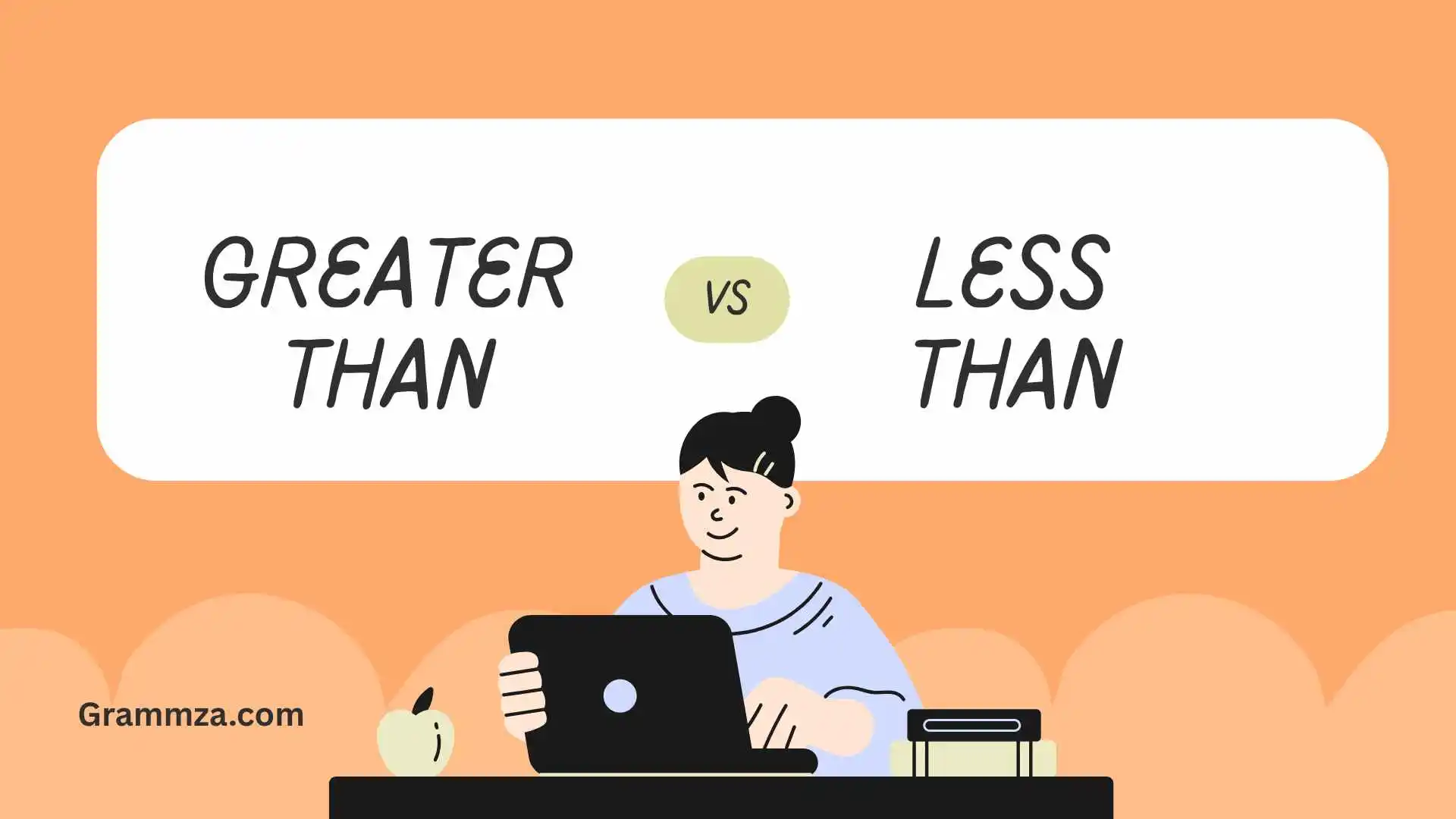
Many beginners in math and basic comparisons often feel confused about greater than or less than symbols. These symbols look simple, but people sometimes mix them up because they look similar. Students, parents, and even adults searching online often want to clearly understand which symbol means bigger and which means smaller.
People frequently search for greater than or less than because these symbols are used everywhere. You see them in school math problems, exams, programming, spreadsheets, and everyday comparisons like prices, numbers, or quantities. If you misunderstand them, you might answer questions incorrectly or misinterpret important information.
Understanding the difference between greater than or less than is very important for learning mathematics and logical comparisons. In this article, you will learn what each symbol means, how to use them correctly, examples in sentences and math problems, common mistakes, helpful memory tips, and simple rules to remember the difference easily.
Quick Answer
The greater than ( > ) symbol means one number is bigger than another number.
The less than ( < ) symbol means one number is smaller than another number.
For example:
- 10 > 5 means 10 is greater than 5
- 3 < 8 means 3 is less than 8
Meaning and Definition of Each Symbol
Greater Than ( > )
The greater than symbol shows that one value is larger or bigger than another value.
It points toward the smaller number and opens toward the bigger number.
Simple Definition
Greater than means more, bigger, or larger compared to another number.
Examples
- 9 > 4
- 20 > 10
- 100 > 50
Example Sentences
- Nine is greater than four.
- Twenty is greater than ten.
- The price of $50 is greater than $30.
Less Than ( < )
The less than symbol shows that one value is smaller than another value.
It points toward the smaller number and opens toward the bigger number.
Simple Definition
Less than means smaller or lower compared to another number.
Examples
- 3 < 6
- 15 < 20
- 45 < 100
Example Sentences
- Three is less than six.
- Fifteen is less than twenty.
- The temperature of 10°C is less than 25°C.
Key Differences Between the Words
Here are the main differences between greater than or less than:
- Greater than ( > ) shows that a number is bigger.
- Less than ( < ) shows that a number is smaller.
- The open side of the symbol always faces the larger number.
- The pointed side always faces the smaller number.
- Greater than means more value, while less than means lower value.
Comparison Table
| Symbol | Meaning | Usage | Example |
| > | Greater than | Used when the first number is bigger | 12 > 8 |
| < | Less than | Used when the first number is smaller | 4 < 9 |
Examples in Sentences
Here are some real-life examples showing how greater than or less than are used.
Greater Than Examples
- 15 > 7 (Fifteen is greater than seven.)
- 50 > 25 (Fifty is greater than twenty-five.)
- 100 > 90 (One hundred is greater than ninety.)
- 60 > 45 (Sixty is greater than forty-five.)
Less Than Examples
- 3 < 10 (Three is less than ten.)
- 12 < 20 (Twelve is less than twenty.)
- 7 < 15 (Seven is less than fifteen.)
- 30 < 100 (Thirty is less than one hundred.)
Everyday Examples
- 5 apples are less than 10 apples.
- 100 dollars is greater than 50 dollars.
- A speed of 80 km/h is greater than 60 km/h.
Common Mistakes
Many learners make small mistakes when using greater than or less than symbols.
Mistake 1: Reversing the Symbol
❌ 5 > 10
✔ 5 < 10
Explanation: Five is smaller than ten.
Mistake 2: Forgetting Which Side Opens
Some people forget that the open side always faces the bigger number.
❌ 8 < 3
✔ 8 > 3
Explanation: Eight is bigger than three.
Mistake 3: Confusing Symbols During Quick Reading
When solving math quickly, students may misread the symbols.
❌ 12 < 5
✔ 12 > 5
Always check the direction of the symbol carefully.
Tips to Remember the Difference
Here are some simple memory tricks to remember greater than or less than.
1. The Hungry Alligator Trick
Imagine the symbol is a hungry alligator.
The alligator always eats the bigger number.
Example:
8 > 3
The open mouth faces 8 because it is larger.
2. Open Side = Bigger Number
The open side of the symbol always points toward the bigger number.
Example:
9 > 2
The open side faces 9.
3. Pointed Side = Smaller Number
The pointed tip of the symbol points toward the smaller number.
Example:
4 < 10
The tip points toward 4.
When to Use Each Symbol
Understanding when to use greater than or less than is very helpful in math and daily life.
Use Greater Than ( > ) When:
- One number is bigger than another
- Comparing prices or values
- Solving math problems
- Comparing scores or measurements
Examples:
- 25 > 10
- 100 > 75
- 60 > 45
Use Less Than ( < ) When:
- One number is smaller than another
- Comparing small quantities
- Showing lower values
- Describing limits or conditions
Examples:
- 5 < 12
- 30 < 50
- 10 < 20
Grammar Rules (If Applicable)
Although greater than or less than are mainly used in mathematics, they also appear in written language.
Rule 1: Use “than” after comparative words
Correct:
- Greater than
- Less than
Example:
- Ten is greater than five.
- Three is less than eight.
Rule 2: Do Not Reverse the Comparison
Incorrect:
- Five is greater than ten.
Correct:
- Five is less than ten.
Rule 3: Use Them for Numbers and Quantities
These comparisons usually apply to:
- Numbers
- Amounts
- Measurements
- Scores
- Prices
Synonyms or Related Words
Here are some related words that are similar to greater than or less than.
Words Related to Greater Than
- Bigger than
- More than
- Larger than
- Higher than
Example:
- 20 is more than 10.
Words Related to Less Than
- Smaller than
- Lower than
- Fewer than
- Under
Example:
- 5 is smaller than 8.
Frequently Asked Questions (FAQs)
1. What is the difference between greater than and less than?
Greater than means one number is bigger than another, while less than means one number is smaller than another.
2. Which symbol means greater than?
The symbol > means greater than.
Example:
10 > 5
3. Which symbol means less than?
The symbol < means less than.
Example:
3 < 9
4. How do I remember greater than or less than?
You can remember using the hungry alligator trick. The open mouth of the symbol always faces the bigger number.
5. Are these symbols only used in math?
No. They are also used in programming, spreadsheets, statistics, and logical comparisons.
6. What does ≤ or ≥ mean?
- ≤ means less than or equal to
- ≥ means greater than or equal to
These symbols include equality as well as comparison.
Conclusion
Understanding the difference between greater than or less than is an important basic skill in mathematics and logical thinking. These symbols help us compare numbers, quantities, prices, and measurements in a simple and clear way.
Remember that greater than ( > ) means a number is bigger, while less than ( < ) means a number is smaller. The open side of the symbol always faces the larger number, which makes it easier to remember.
By practicing examples and using simple memory tricks like the hungry alligator method, you can quickly master these symbols and avoid common mistakes. Once you understand them well, comparing numbers becomes easy and natural.

I am Daniel Brooks, a passionate grammar enthusiast who loves making English easy and clear for everyone. I focus on simplifying tricky grammar rules so readers can understand them without confusion. I enjoy creating helpful and engaging content that improves everyday writing skills. My goal is to make learning grammar simple, practical, and enjoyable for all.