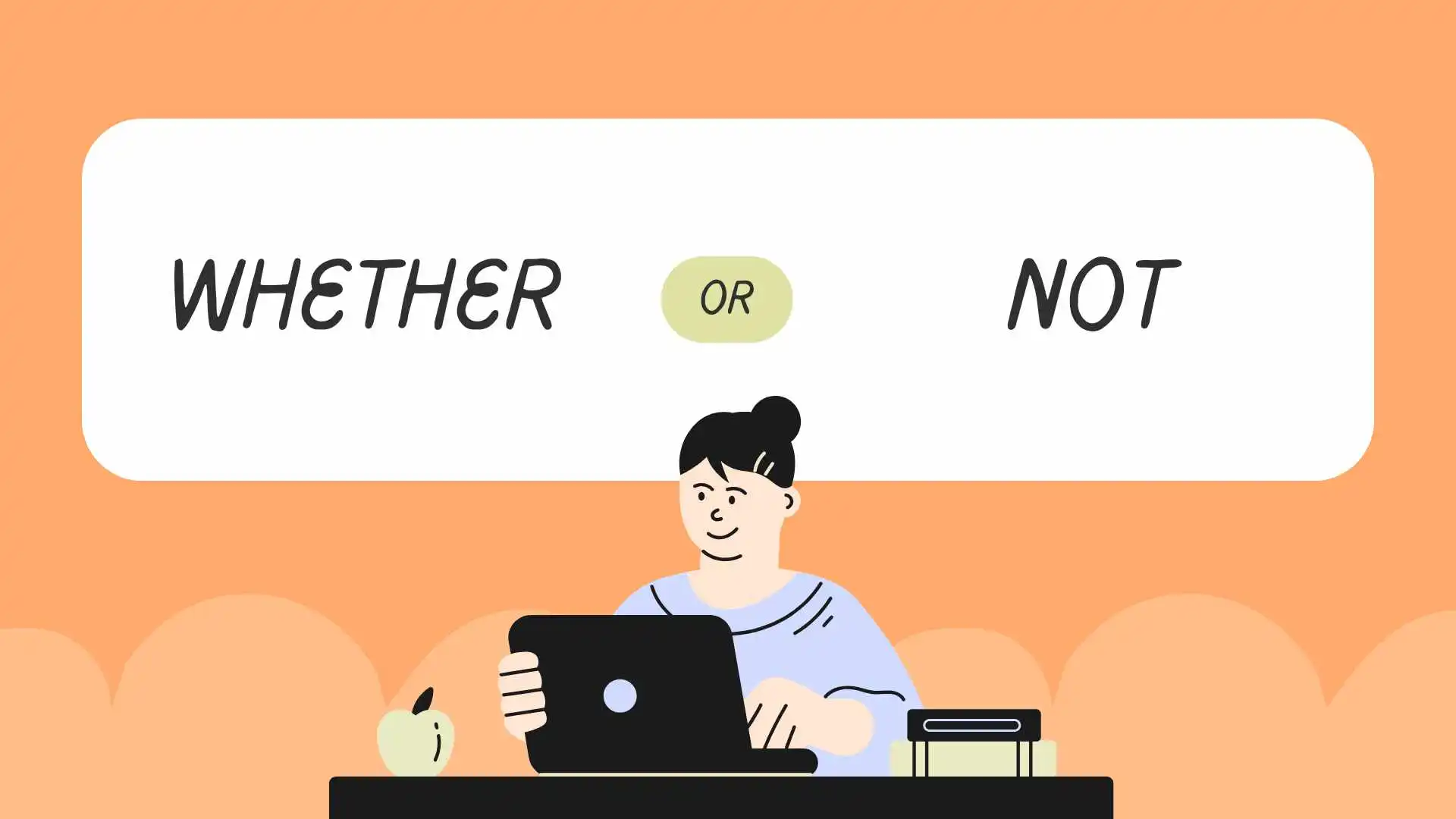
Many English learners and even native speakers often get confused about how to use “whether or not” correctly. It may look simple, but people are not always sure when to include “or not” and when to leave it out. This confusion leads to mistakes in writing and speaking.
People search for “whether or not” because they want clear rules and easy examples. They want to know if both forms are correct, if they mean the same thing, and how to use them in everyday sentences.
In this article, you will learn everything about “whether or not” in simple English. We will explain meanings, differences, grammar rules, examples, and tips to help you remember the correct usage easily.
Quick Answer
“Whether or not” is used to show a choice between two possibilities (yes or no).
In many cases, you can use “whether” alone without “or not,” and the meaning stays the same.
However, “whether or not” is used for emphasis or when you want to make both options very clear.
Meaning and Definition of Each Word
1. Whether
Definition:
“Whether” is a conjunction used to introduce choices or alternatives.
Simple Explanation:
It shows that there are two possibilities (yes or no).
Examples:
- I don’t know whether he will come.
- She is deciding whether to study or work.
- Tell me whether you agree.
2. Whether or Not
Definition:
“Whether or not” is a phrase used to clearly show both possibilities.
Simple Explanation:
It emphasizes that something will happen regardless of the result.
Examples:
- I will go whether or not you come.
- She will try whether or not it is difficult.
- We must decide whether or not to continue.
Key Differences Between the Words
Here are the main differences between “whether” and “whether or not”:
- “Whether” alone is shorter and often enough in most sentences.
- “Whether or not” adds emphasis and clarity.
- “Whether” is more common in everyday use.
- “Whether or not” is often used in formal or serious contexts.
- “Whether or not” can show that the result does not matter.
Comparison Table
| Word | Meaning | Usage | Example |
| Whether | Shows a choice or possibility | General use | I don’t know whether she is coming. |
| Whether or not | Shows both possibilities clearly | Emphasis or clarity | I will go whether or not she comes. |
Examples in Sentences
Using “Whether”
- I am not sure whether he likes coffee.
- She asked whether the meeting was canceled.
- We need to decide whether to travel.
- Tell me whether you understand this lesson.
- He wondered whether it would rain.
Using “Whether or Not”
- I will attend the event whether or not you join me.
- She will finish the work whether or not it is easy.
- We must act whether or not we feel ready.
- He will support you whether or not you succeed.
- The game will continue whether or not it rains.
Common Mistakes
Here are some common mistakes people make:
1. Using “if” instead of “whether”
❌ Incorrect: I don’t know if he is coming or not.
✅ Correct: I don’t know whether he is coming or not.
👉 Use “whether” when there are two clear choices.
2. Using “or not” unnecessarily
❌ Incorrect: I don’t know whether or not he is coming.
✅ Correct: I don’t know whether he is coming.
👉 “Or not” is optional here and can be removed.
3. Forgetting “or not” when needed
❌ Incorrect: I will go whether you come.
✅ Correct: I will go whether or not you come.
👉 In this case, “or not” is important for meaning.
Tips to Remember the Difference
Here are some simple tips:
- ✅ Use “whether” for simple choices.
- ✅ Use “whether or not” when you want to emphasize both options.
- ✅ If the sentence still makes sense without “or not,” you can remove it.
- ✅ If the sentence sounds incomplete, keep “or not.”
Memory Trick:
Think of “whether or not” = “no matter what.”
Example:
- I will go whether or not it rains.
👉 (I will go no matter what.)
When to Use Each Word
Use “Whether” When:
- You are asking about a choice
- The sentence is simple
- You don’t need strong emphasis
Examples:
- She asked whether I was ready.
- I don’t know whether he agrees.
Use “Whether or Not” When:
- You want to show both possibilities clearly
- You want to emphasize that the result doesn’t matter
- You are writing formally
Examples:
- I will help you whether or not you ask.
- The decision stands whether or not you agree.
Grammar Rules
Here are some important grammar rules:
1. “Whether” vs “If”
- Use “whether” for choices.
- Use “if” for conditions.
Example:
- I don’t know whether he will come. ✅
- If he comes, we will start. ✅
2. Using with Infinitives
You can use “whether” with “to + verb”.
Examples:
- She is deciding whether to go.
- I don’t know whether to stay or leave.
3. Formal Writing
“Whether” is preferred over “if” in formal English.
Example:
- Please confirm whether you will attend.
Synonyms or Related Words
Here are some related words and phrases:
- If (less formal)
- Regardless of
- No matter if
- Either way
- In any case
Examples:
- I will go no matter if it rains.
- I will go either way.
Frequently Asked Questions (FAQs)
1. Is “whether or not” always necessary?
No, it is not always necessary. In many cases, “whether” alone is enough.
2. Can I replace “whether” with “if”?
Sometimes yes, but not always. Use “whether” when there are clear alternatives.
3. Which is more formal: “whether” or “if”?
“Whether” is more formal and preferred in formal writing.
4. Can I start a sentence with “whether or not”?
Yes, you can.
Example:
- Whether or not you agree, we must continue.
5. Does “whether or not” mean the same as “no matter what”?
Yes, in many cases it has a similar meaning.
6. Is it wrong to use “whether or not” too often?
It’s not wrong, but it can make sentences longer. Use it only when needed.
Conclusion
Understanding “whether or not” is simple once you know the basics. “Whether” is used to show a choice, while “whether or not” adds emphasis and makes both options clear.
In many sentences, you can use “whether” alone without any problem. However, when you want to stress that something will happen regardless of the outcome, “whether or not” is the better choice.